



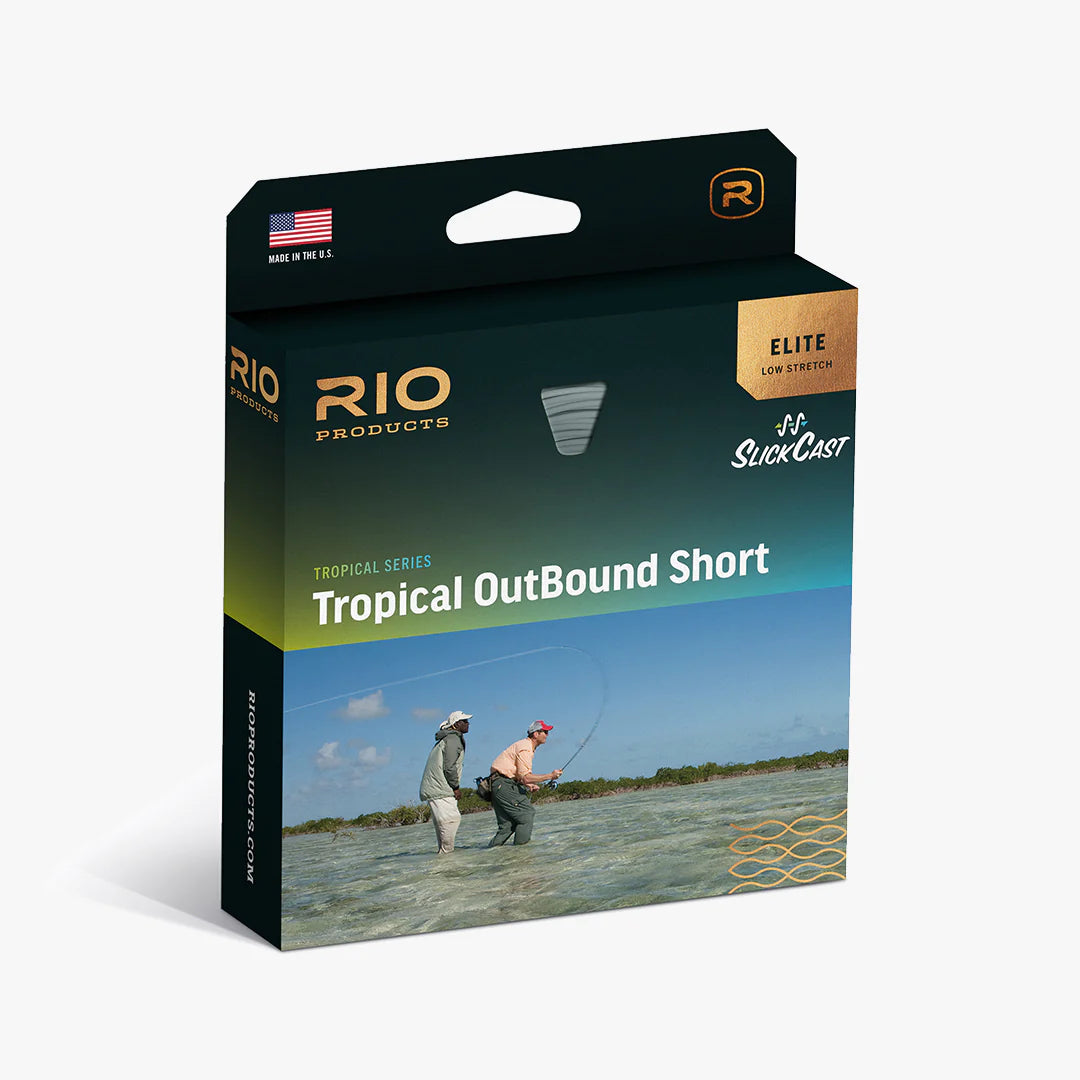
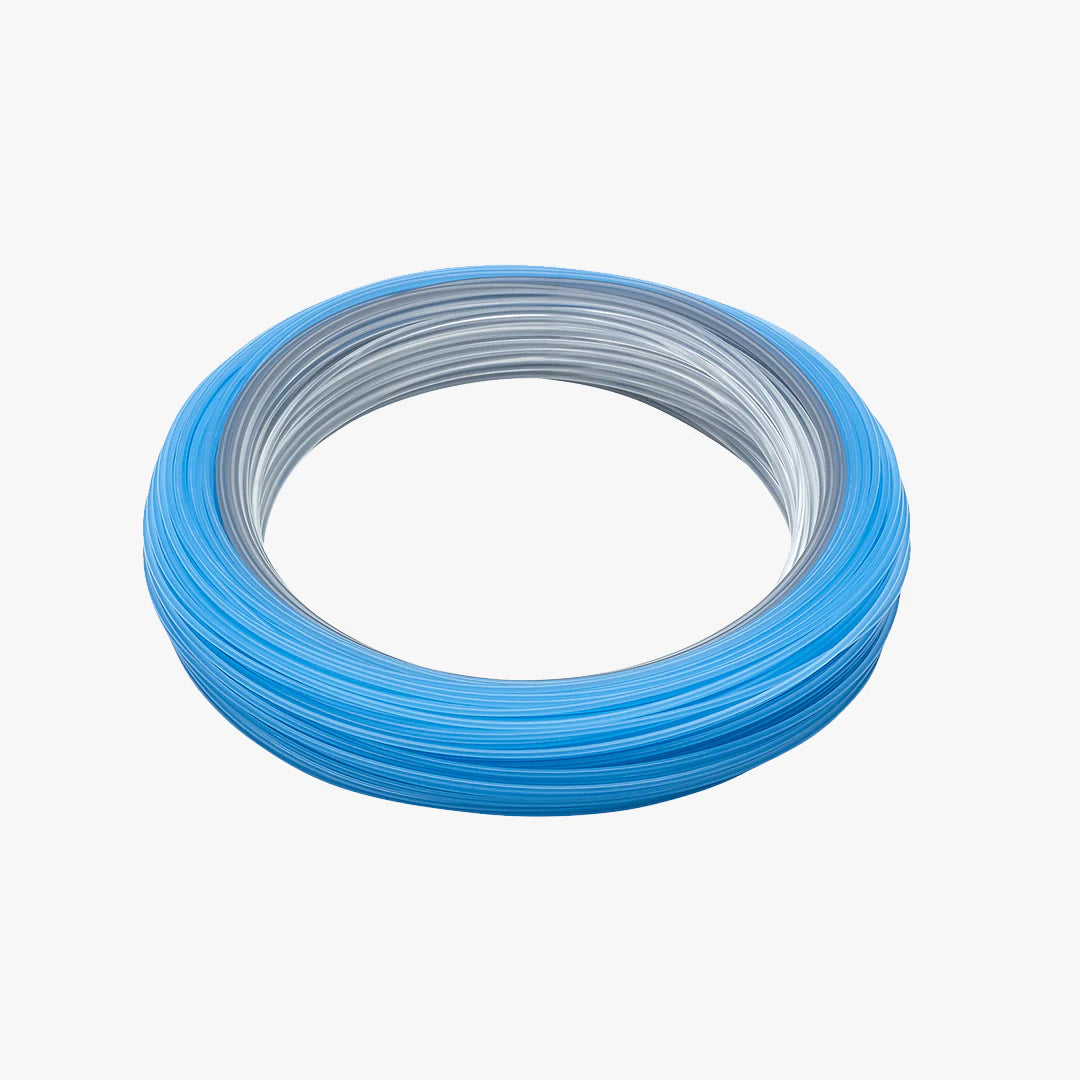
RIO Elite Tropical Outbound Short - Intermediate
 In Stock • Bozeman, MT

- Heavier than standard fly lines for easy casting
- Short, powerful front taper to cast the largest of flies
- Unique, front-loaded weight distribution makes ultra-long casts
- Low stretch DirectCore for hard, solid strip sets
- Built with RIO's exceptionally slick, durable SlickCast coating


Description
RIO's Tropical OutBound Short lines are designed for fishing in hot climates. A short, aggressive front taper easily casts large and weighted flies very long distances, while the powerful head design loads rods deeply and efficiently for effortless casts. A range of densities including Multi Density Control allows the angler to cover the water column top to bottom with this versatile line series. Now built with RIO's SlickCast and DirectCore technologies, the Elite Tropical Outbound Short is the highest performance line on the market for delivering big flies to big fish under tropical conditions.
Features
• Short, 30-Foot Head — Loads fast-action rods in one to two strokes for the fastest possible delivery to moving fish.
• 15-Foot Clear Intermediate Tip — Sinks flies to a 3-5 foot working depth for baitfish and crab patterns just under the surface.
• DirectCore Low-Stretch — Transmits strip-set energy directly to the hook for solid, immediate hooksets at distance.
• SlickCast Coating — Slick, durable finish that resists tropical heat, humidity, and coil memory.
• 8-12 wt Only — Purpose-built for the heavier end of saltwater fly sizes; no lighter options in this taper.
• Welded Loops, Front and Rear — Fast, secure connections to backing and leader without nail knots.
• 100' Total Length — Full-length running line for long runs from tarpon, roosterfish, and other hard-fighting species.
Rod Pairing
| Rod Action | Pairing | Notes |
|---|---|---|
| Fast Action | Ideal | The short, aggressive 30-foot head and heavy grain weight are purpose-built for fast-action blanks — the rod loads instantly and turns over big, wind-resistant flies with minimal false casting. |
| Medium-Fast Action | Works | Performs on medium-fast rods, though the overweighted head can feel like casting a size heavier than marked. Anglers who find it overpowering may want to size down one line weight from the rod's rating. |
| Medium Action | Not Recommended | The concentrated, front-loaded grain weight overloads medium-action blanks quickly, producing tip shock rather than a smooth casting loop. A fast-action rod is the right tool for this taper. |
Size Guide
| Line Weight | Head Length | Head Weight | Grain Wt (30') | Species / Technique |
|---|---|---|---|---|
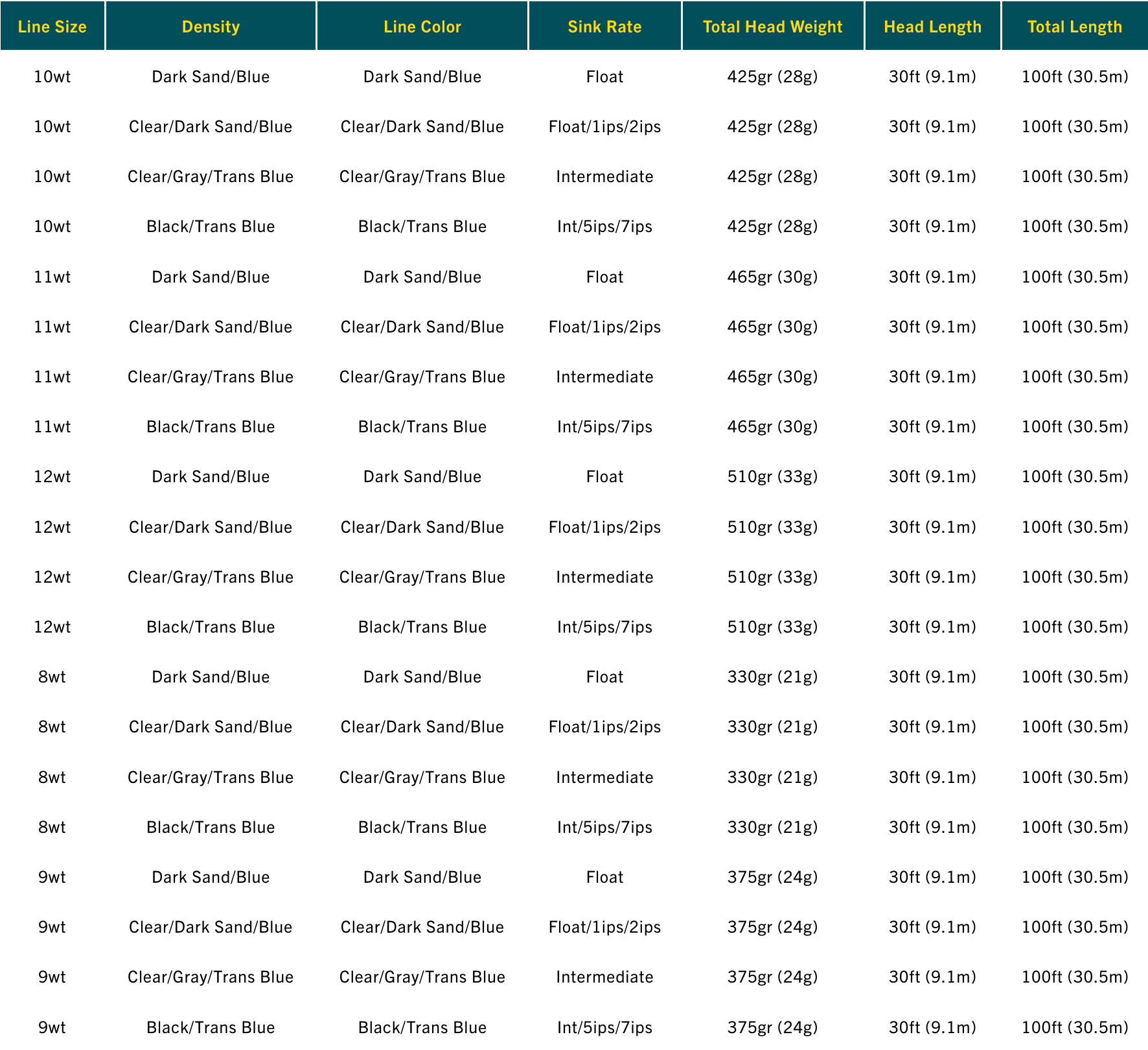
| WF8I | 30' / 9.1M | 330gr / 21.4g | 330gr / 21.4g | Peacock bass, dorado, juvenile tarpon, snook |
| WF9I | 30' / 9.1M | 375gr / 24.3g | 375gr / 24.3g | Juvenile tarpon, peacock bass, dorado, striped bass, snapper |
| WF10I | 30' / 9.1M | 425gr / 27.6g | 425gr / 27.6g | Tarpon, roosterfish, redfish, trevally, snapper |
| WF11I | 30' / 9.1M | 465gr / 30.2g | 465gr / 30.2g | Tarpon, roosterfish, snapper, trevally |
| WF12I | 30' / 9.1M | 510gr / 33.1g | 510gr / 33.1g | Large tarpon, GT, billfish, offshore species |
FAQ
What are the parts of a fly line and what does each section do?
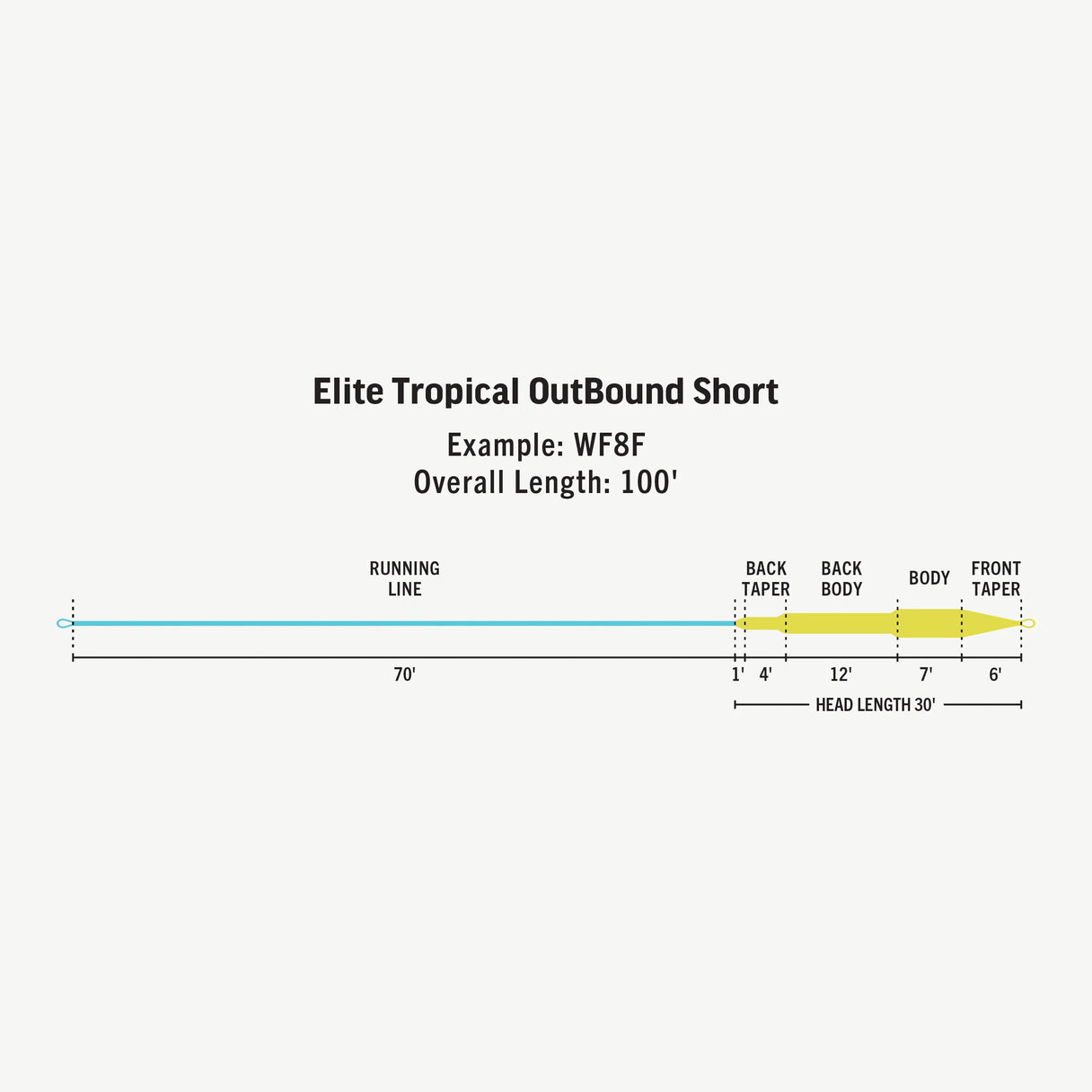
A weight-forward fly line has five sections: Running Line: The thin, level back section that shoots through guides. SlickCast's reduced friction keeps this line moving on long shots to backing. Rear Taper: The transition from running line to belly. On the Tropical Outbound Short, this transition is brief by design — unlike long-head lines, this taper isn't built for carrying line; it's built to get weight into the head fast. Belly (Head): The thickest, heaviest section, and the core of this line's design. At just 30 feet, the head is short and concentrated, putting the full grain weight outside the rod tip in one or two strokes. Front Taper: The transition from belly to tip. Short and aggressive — built to turn over large, air-resistant flies at distance rather than deliver a delicate presentation. Tip: The final 15 feet, a clear intermediate section that sinks the fly 3-5 feet below the surface and connects to the leader via a welded loop.
How does the Intermediate version differ from the Elite Tropical Outbound Short I/S5/S7?
Both share the same 30-foot overweighted head, DirectCore, and SlickCast coating, but they're built for different depths: Intermediate (this line): A full intermediate sink rate with a 15-foot clear tip. Settles evenly to 3-5 feet — the right choice for sight-fishing deeper flats, shallow dropoffs, and any situation where the fish are just under the surface. I/S5/S7: Steps down through progressively faster sink rates — 17 feet of fast-sinking line followed by 13 feet of extra-fast-sinking line — to reach 6-12 feet. Built for deeper water, stronger current, or fish holding lower in the column. Choose the Intermediate for shallow, sight-fishing presentations. Choose the I/S5/S7 when you need to get down faster or fish deeper structure.
What is DirectCore and why does it matter on a tropical intermediate line?
DirectCore is RIO's low-stretch core technology. Standard fly line cores stretch under load, absorbing some of the energy from the strip set before it reaches the hook. DirectCore minimizes that stretch, transmitting more of the strip-set energy directly to the fly — a meaningful difference when a tarpon, roosterfish, or mutton snapper eats and the hook set has to be immediate and firm. DirectCore is also easy to anneal (stretch out by hand before fishing) and resists the memory coils that plague some saltwater lines after time on the reel in tropical heat.
What is SlickCast and how does it affect performance?
SlickCast is RIO's low-friction outer coating. The practical effect is reduced resistance through the guides on both the cast and the retrieve, which translates into longer, faster shots with less effort — useful when a fish appears at distance and there's no time for extra false casts. The coating is also built to hold up under UV exposure, deck contact, and repeated saltwater use without degrading, which matters on a line designed to spend its life in hot, bright, abrasive tropical conditions.