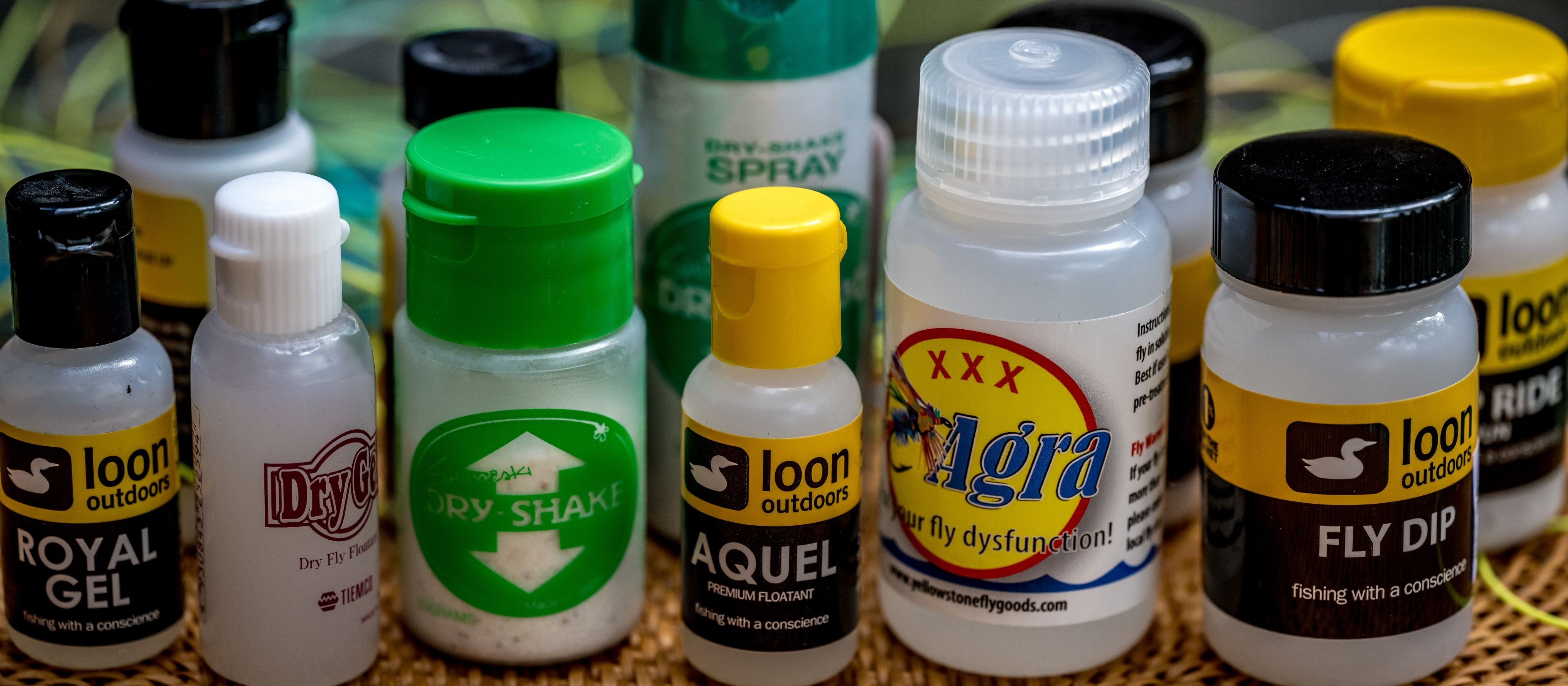
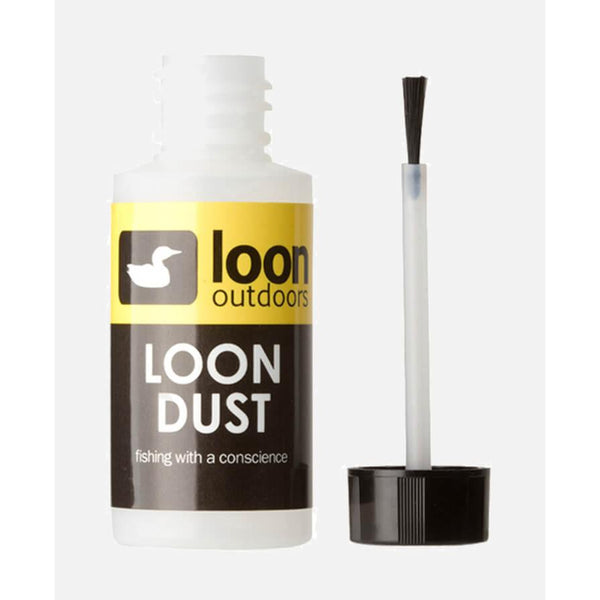
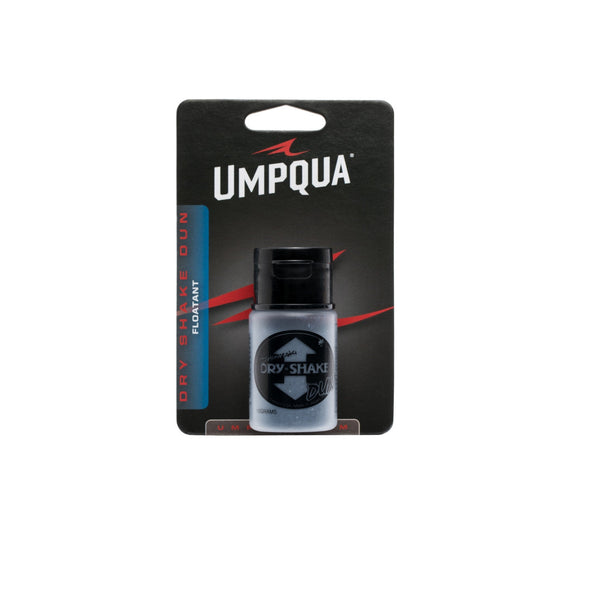
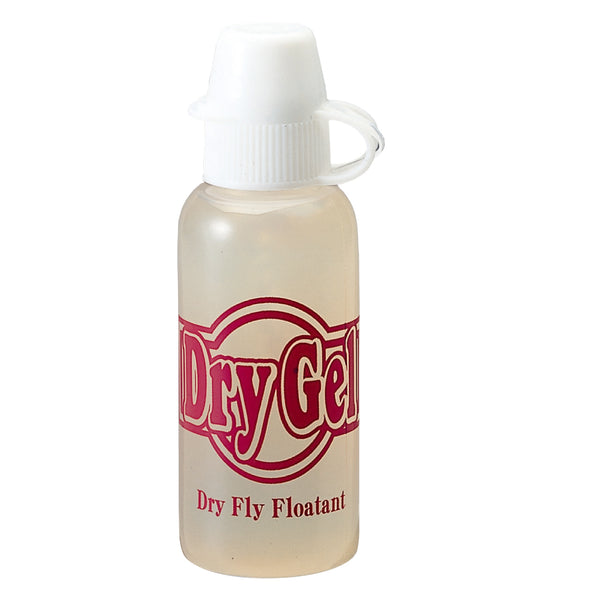
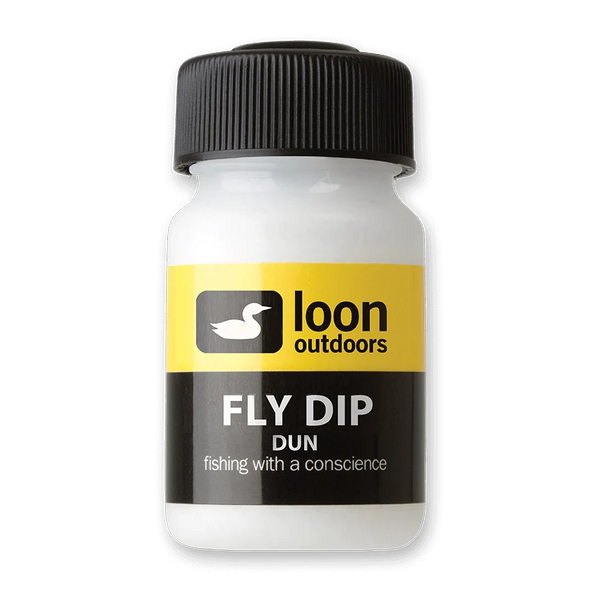
Floatants come in several forms, each with their own strengths. Gel floatants are the most common and are applied by hand to coat the fibers of a fly before fishing. They are ideal for standard dry flies with hackle, dubbing, or hair. Paste floatants are thicker and slightly heavier than gels and can be applied not only to flies but also to leaders, strike indicators, or even the tip of the fly line to help reduce drag and improve drift. Powder floatants are used after a fly becomes soaked; you simply drop the fly into the powder, shake, and it comes out dry and buoyant again, often with a light dusting that mimics natural air bubbles—perfect for reviving flies mid-day. Spray floatants are quick and convenient, evenly coating flies without matting delicate materials, making them especially useful for larger patterns or when you want fast application. Lastly, liquid dips allow you to submerge the fly for thorough waterproofing, often providing longer-lasting performance than gels or powders, which makes them a popular choice for big attractors and terrestrials. Many anglers carry more than one type of floatant, using gels or pastes to prep flies, powders to restore them after they’ve been fished, and sprays or dips for speed and convenience on the water.