



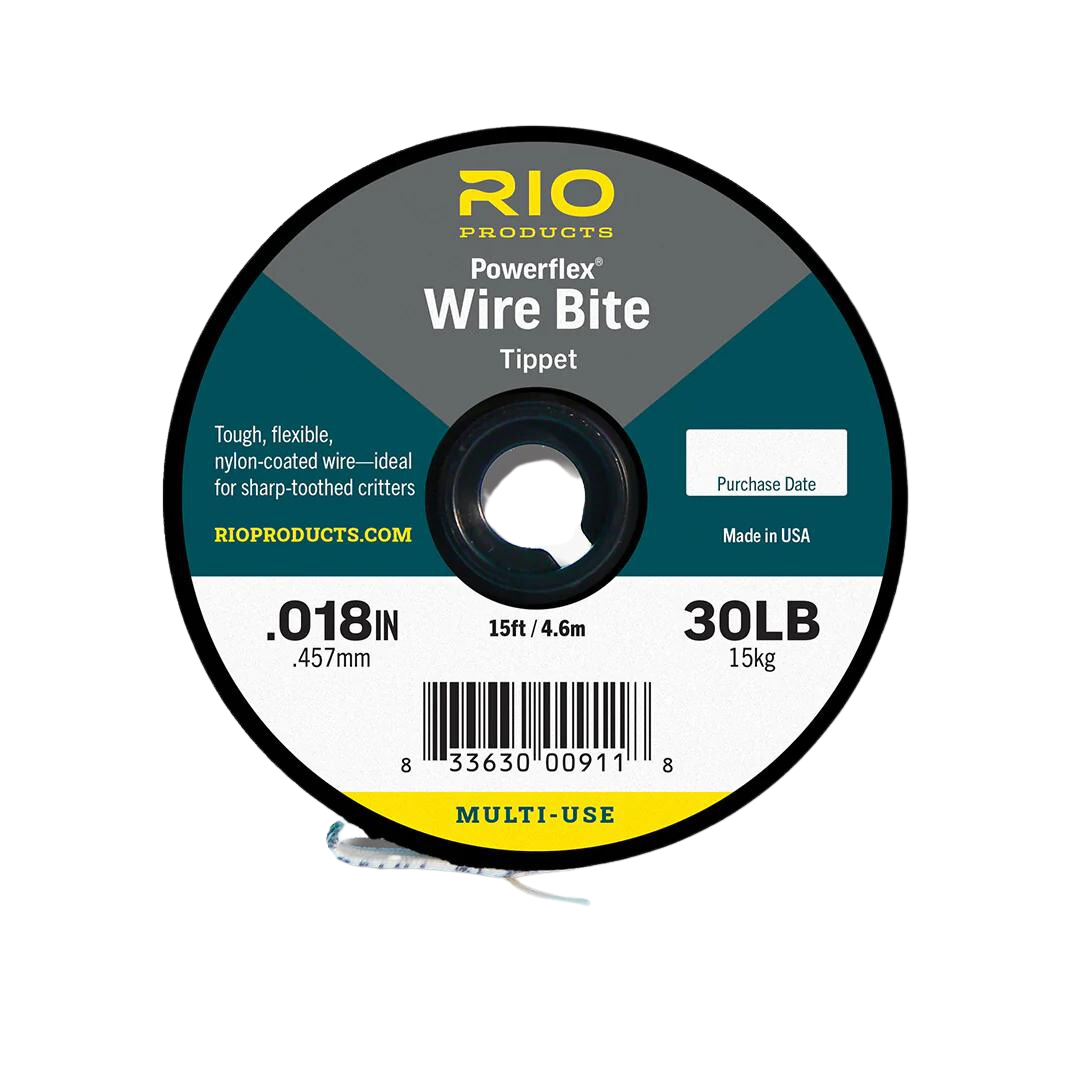
RIO Powerflex Wire Bite Tippet
 In Stock • Bozeman, MT

Tough, flexible, nylon-coated wire that is super easy to tie a knot with - ideal for sharp-toothed critters like Pike, Musky, Barracuda and Bluefish.


Description
Some fish are going to cut off your fly. Golden dorado in Bolivia, barracuda on the flats, pike in the weeds, musky on a big streamer — the teeth are fast, sharp, and they don’t discriminate between fluorocarbon strengths. Wire is the answer, and the question with wire has always been the same: can you actually work with it?
The RIO Powerflex Wire Bite Tippet is multi-strand braided stainless steel wire with a nylon coating — a construction that solves the traditional problem with wire tippet. The braid is supple enough to tie with standard knots directly to the class tippet and fly, without the kinking and stiffness that makes bare stainless wire difficult to use. The nylon jacket protects against corrosion in both freshwater and saltwater and adds a layer of abrasion resistance. The result is a wire tippet that handles like heavy monofilament compared to bare wire, while still providing the bite protection that toothy fish demand.
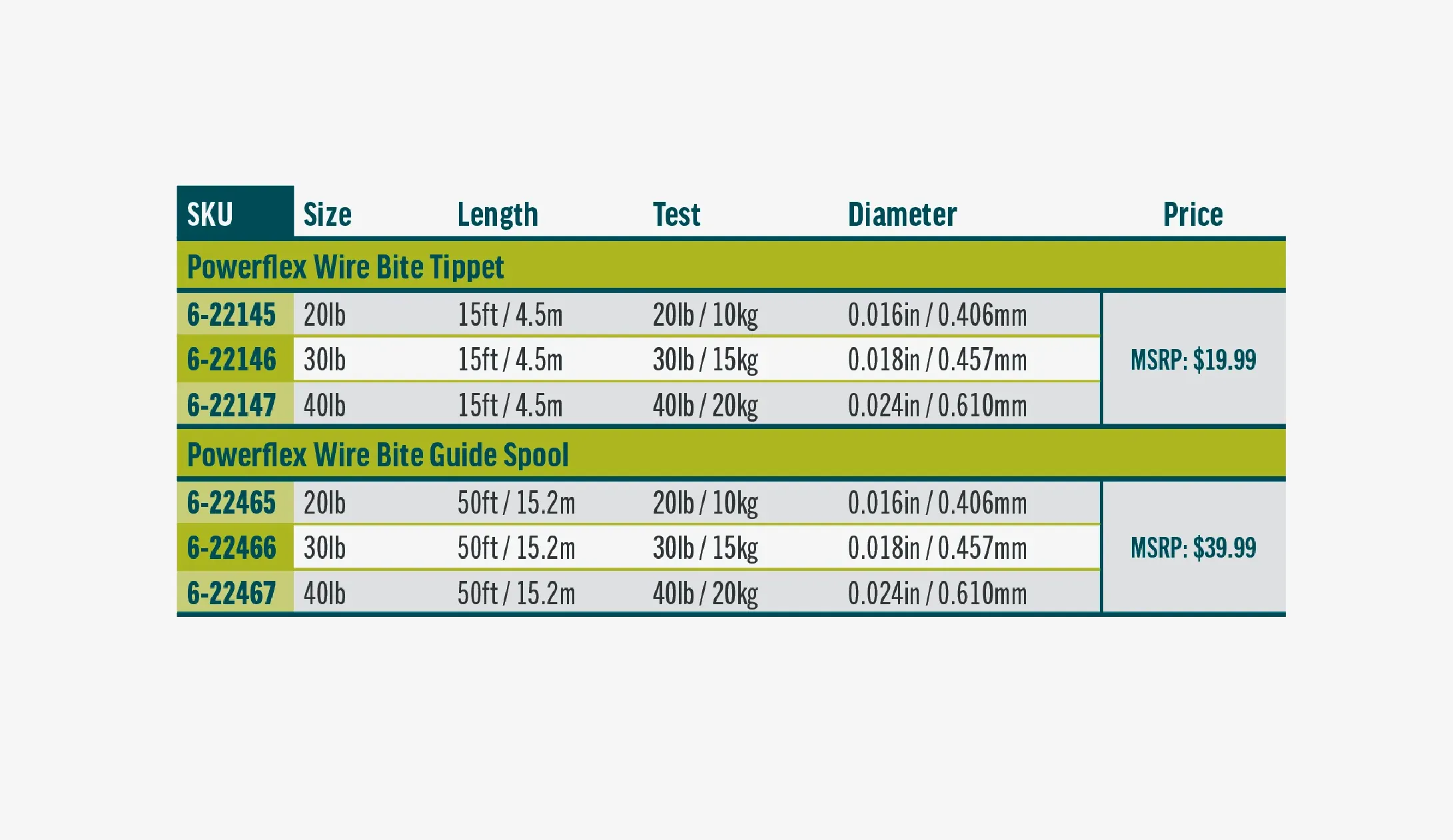
Available in 20, 30, and 40 lb in 15-foot standard spools and 50-foot guide spools. The 20 lb is the standard for smaller toothy fish and situations where fly action is the priority. The 30 lb covers most freshwater and saltwater toothy applications including golden dorado, barracuda, and large pike. The 40 lb is for the heaviest applications where the wire is expected to take repeated strikes or sustained pressure.
Features
• Nylon-Coated Multi-Strand Braided Wire — Braided stainless steel construction with nylon jacket; significantly more supple and knottable than bare stainless wire while maintaining bite protection.
• Knottable — Can be tied directly to the class tippet and fly using standard knots including the Slim Beauty, Non-Slip Mono Loop, and Improved Clinch. No crimping tools or swaged sleeves required.
• Corrosion Resistant — Nylon coating protects the stainless wire core in both freshwater and saltwater environments.
• Three Strengths: 20, 30 & 40 lb — Covers light to heavy toothy applications in freshwater and saltwater.
Size Guide
| Strength | Diameter | Recommended Applications |
|---|---|---|
| 20 lb | 0.016" (.406mm) | Smaller pike and pickerel; bluefish; barracuda in clear water on lighter leaders; golden dorado; smaller wahoo; tigerfish. Use when fly action is the priority and fish sizes are moderate. |
| 30 lb | 0.018" (.457mm) | Standard all-around wire bite size. Larger pike and musky; barracuda; bluefish on heavier rigs; golden dorado in Bolivia; larger wahoo. The most versatile size for most freshwater and saltwater applications. |
| 40 lb | 0.024" (.610mm) | Large barracuda and aggressive toothy species near structure; golden dorado in Bolivia; sharks; trophy pike |
FAQ
What is the nylon coating, and why does it matter?
The Powerflex Wire Bite Tippet is a multi-strand braided stainless steel wire with a nylon jacket. The nylon coating serves two purposes: it protects the wire from corrosion in both freshwater and saltwater, and it makes the wire significantly more supple and knottable than bare wire. Bare stainless wire is difficult to knot cleanly and tends to kink under repeated flexing. The nylon-coated braided construction maintains bite-proof protection while remaining soft enough to tie with standard knots directly to both the class tippet and the fly.
How long should my wire bite section be?
For most freshwater applications (pike, musky, golden dorado), 6–12 inches is standard. For barracuda in saltwater, 12–18 inches is common since barracuda can strike and hit a fly further up the leader than freshwater toothy fish. Keep the wire section as short as the species allows — longer wire reduces fly action and is more visible to the fish.
Does wire tippet affect fly action and presentation?
Yes, to some degree. Wire is stiffer and denser than monofilament or fluorocarbon at equivalent breaking strengths, which restricts the fly’s natural movement to some extent. A Non-Slip Mono Loop at the fly connection mitigates this by providing a hinge point. Using the lightest wire strength that provides adequate bite protection (often 20 or 30 lb for most freshwater toothy fish) also reduces the impact on fly action. For very delicate presentations where fly action is critical, some anglers accept the occasional bite-off from lighter fluorocarbon rather than use wire — this is a legitimate trade-off depending on the species and situation.