



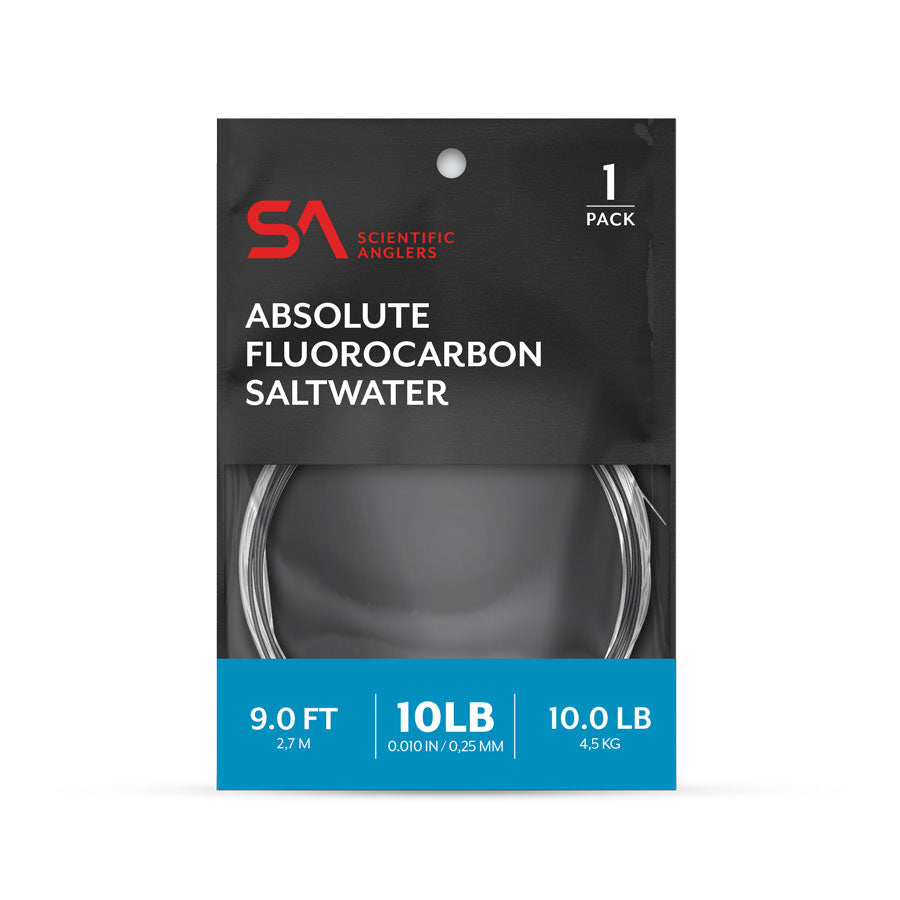
Scientific Anglers Absolute Fluorocarbon Saltwater 9' Leader
 In Stock • Bozeman, MT

- 100% Fluorocarbon for stealthy presentations
- Abrasion-resistant
- 9’ length for saltwater species


Description
On a clear saltwater flat, the leader is the last thing standing between your fly and a refusal. It’s the shadow on the sand, the stiffness that prevents a crab from dropping naturally, the one component that a permit or nervous bonefish can detect even when everything else is right. The Scientific Anglers Absolute Fluorocarbon Saltwater Leader was engineered to make that last connection as invisible and as strong as possible.
Built from 100% fluorocarbon using SA’s Absolute copolymer technology, the Saltwater Leader delivers 15% higher wet knot strength than SA’s previous fluorocarbon material — a meaningful improvement given that fluorocarbon is notoriously unforgiving of poorly tied or poorly seated knots. The near-identical refractive index of fluorocarbon to water makes it significantly less visible to flats fish than nylon, and its greater density causes it to sink rather than float, helping crab and shrimp patterns drop naturally to the feeding zone where permit and bonefish are looking.
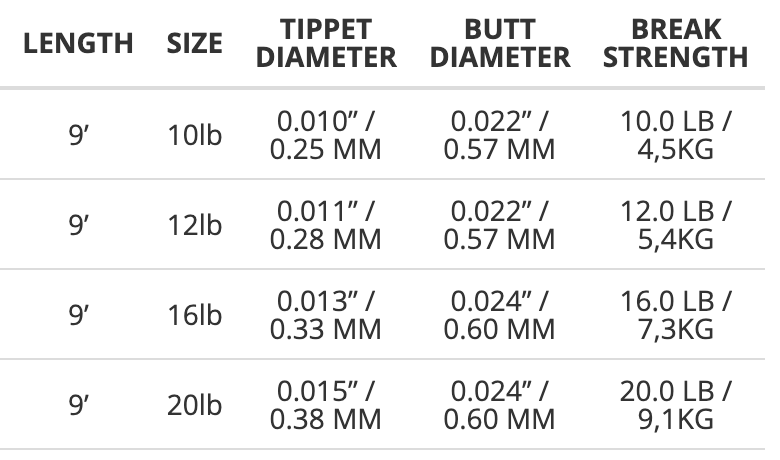
The taper is designed specifically for saltwater flats applications — a powerful butt section for positive turnover of heavier saltwater flies, even into a headwind, tapering cleanly to the 10, 12, 16, or 20 lb tippet section. Available in 9' length in four strengths covering everything from light-tackle bonefish to heavy permit and redfish, with a pre-tied perfection loop in the butt for fast rigging. Packaged in SA’s new 100% recyclable, fully biodegradable paper-based packaging.
Features
• 100% Fluorocarbon — Low refractive index (close to water’s own) makes the leader significantly less visible to flats fish than nylon in clear conditions.
• 15% Higher Wet Knot Strength — SA’s Absolute fluorocarbon formulation delivers 15% stronger wet knot performance than their previous fluorocarbon material for more reliable connections under sudden load.
• Sinks Rather Than Floats — Fluorocarbon’s density causes it to sink, helping crab and shrimp patterns drop naturally to the feeding depth for permit, bonefish, and redfish.
• Superior Abrasion Resistance — Handles contact with coral, oyster bars, mangrove roots, and the rough mouths of permit and redfish better than nylon at equivalent diameters.
• Saltwater-Specific Taper — Powerful butt section engineered for positive turnover of larger saltwater flies and crab patterns, even in moderate wind.
• Pre-Tied Perfection Loop — Butt loop for fast loop-to-loop connection to the fly line. No tools required on the water.
• Available 10–20 lb in 9' — Four strengths covering light-tackle bonefish through heavy permit and bull redfish applications.
• 100% Recyclable, Biodegradable Packaging — Paper-based packaging with fully biodegradable materials, inks, and window.
Size Guide
| Strength | Diameter | Fly Size Range | Technique / Application | Destinations |
|---|---|---|---|---|
| 10 lb | 0.010" | Size 4–10 | Bonefish, pressured flats, skinny water | Belize, Honduras |
| 12 lb | 0.011" | Size 2–8 | All-around bonefish, redfish, snook in clear water | Christmas Island, Seychelles, Mexico, Belize, Bahamas |
| 16 lb | 0.013" | Size 1/0–4 | Permit, redfish, snook, big bonefish | Belize, Mexico, Honduras, Cuba, Louisiana |
| 20 lb | 0.015" | Size 1/0–2/0 | Permit, redfish, jacks, triggerfish, juvenile tarpon | Mexico, Seychelles, Christmas Island |
FAQ
What makes fluorocarbon better than nylon for saltwater flats fishing?
Fluorocarbon’s refractive index (approximately 1.42) is much closer to water’s refractive index (1.33) than nylon’s (1.62), making it significantly less visible underwater in clear conditions. It is also denser than nylon so it sinks rather than floats, which helps crab and shrimp patterns drop naturally to the feeding zone. Fluorocarbon is also more abrasion resistant than nylon, which matters when permit or redfish brush your leader against coral, oyster bars, or mangrove roots.
What is the 15% higher wet knot strength claim?
SA’s Absolute fluorocarbon formulation is engineered to produce 15% higher wet knot strength compared to their previous fluorocarbon material. This is a meaningful improvement because fluorocarbon can be prone to knot slippage if not tied and seated carefully — the improved material is more forgiving and holds more consistently under sudden load. Always wet fluorocarbon knots before cinching and test with a firm pull regardless of material quality.
Which strength should I choose for bonefish?
12 lb is the standard starting point for most bonefish situations in the Bahamas, Belize, Cuba, and the Caribbean. On heavily pressured flats with educated fish in crystal clear water, 10 lb gives you the best combination of stealth and strength.
Which strength should I choose for permit?
16 lb is the standard for most permit situations. It provides enough strength to turn over heavier crab patterns, enough abrasion resistance for contact with coral and the permit’s rough mouth, and remains light enough to avoid spooking fish in clear water. Step up to 20 lb for very large crab flies or in variable conditions.
How does the SA Absolute Fluorocarbon Saltwater Leader compare to the RIO Fluoroflex Saltwater Leader?
Both are 100% fluorocarbon saltwater leaders in the same strength range (10–20 lb) with similar taper designs. SA’s Absolute differentiates on its wet knot strength technology — their 15% improvement claim is specific to the fluorocarbon formulation. RIO’s Fluoroflex is similarly well-regarded with a long track record on the flats. In practice, both are excellent leaders and the choice often comes down to personal preference, taper feel, and which brand’s tippet you’re using to extend the leader.
How do I connect this leader to my fly line?
The SA Absolute Fluorocarbon Saltwater Leader comes with a pre-tied perfection loop in the butt for loop-to-loop connection to the welded loop on most modern saltwater fly lines. Ensure the loop-to-loop connection forms a square (interlocking loops at 90 degrees) rather than a slip configuration, which is significantly weaker and can cut through under sudden load from a fast-running fish.
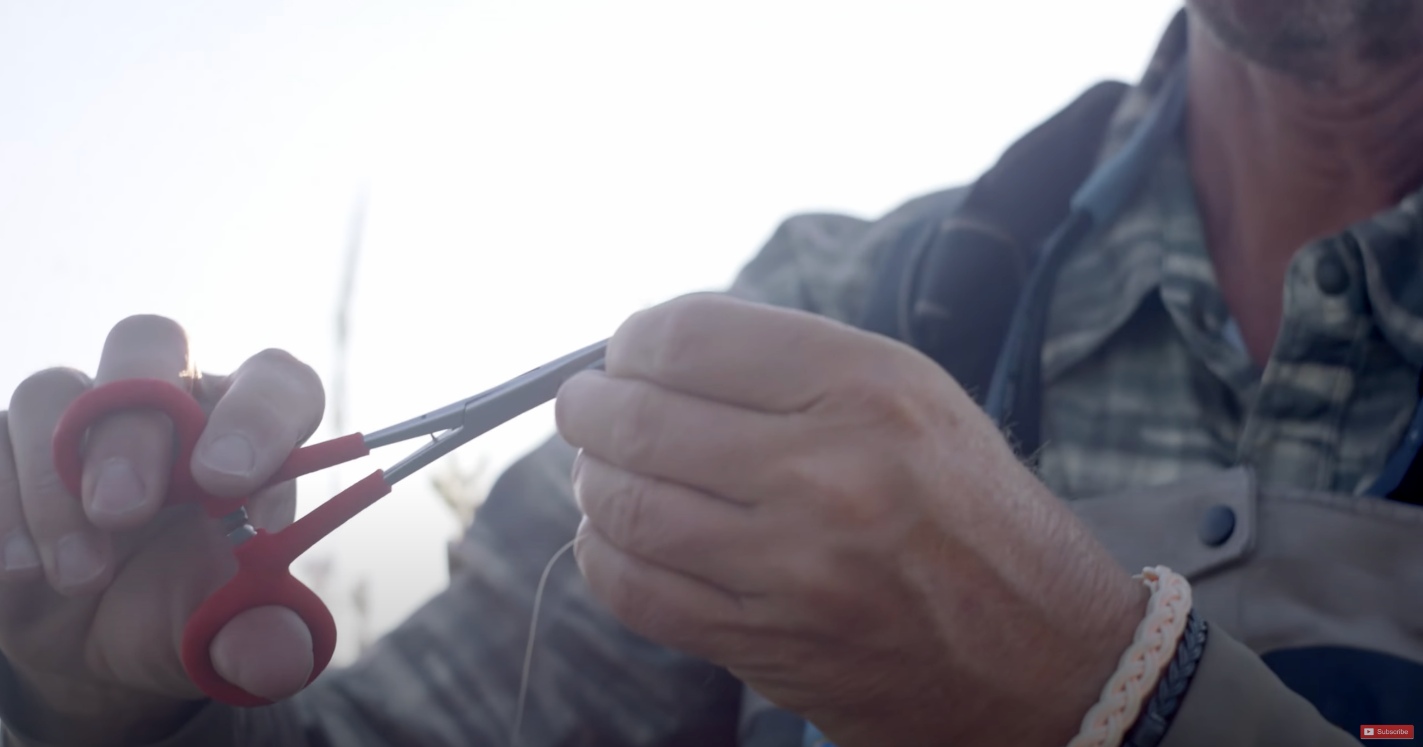
Product Video