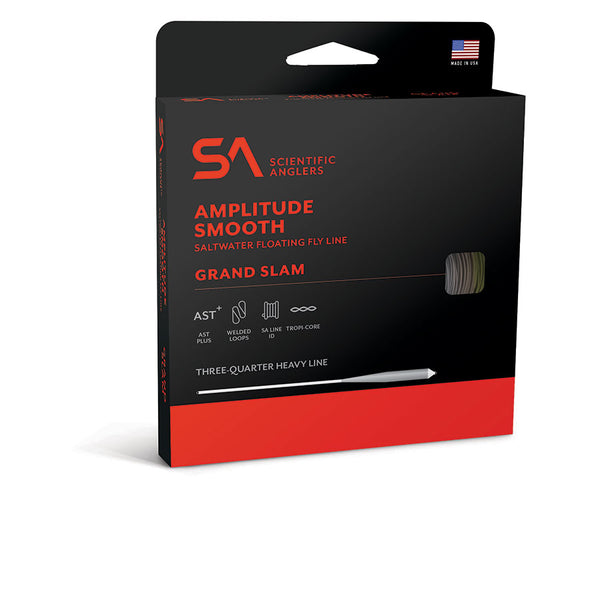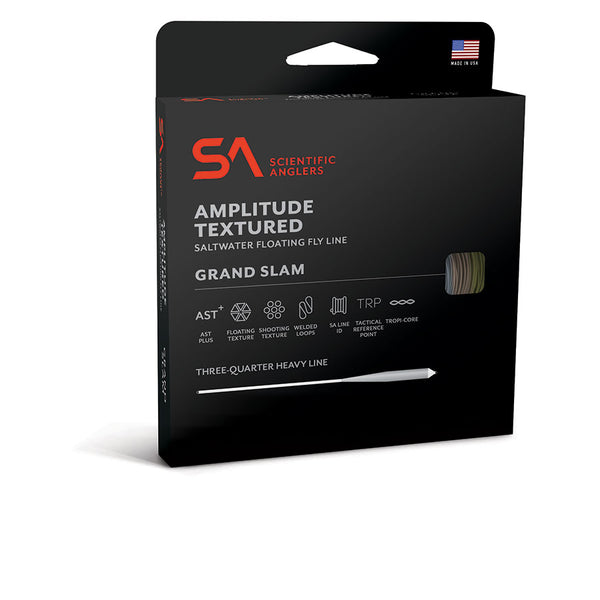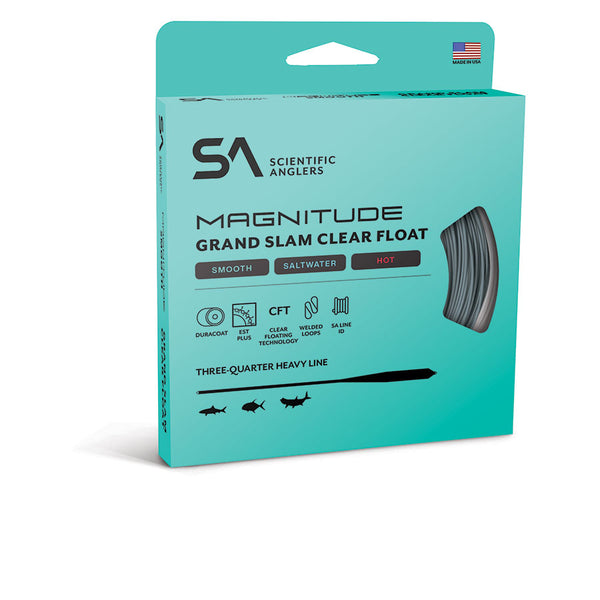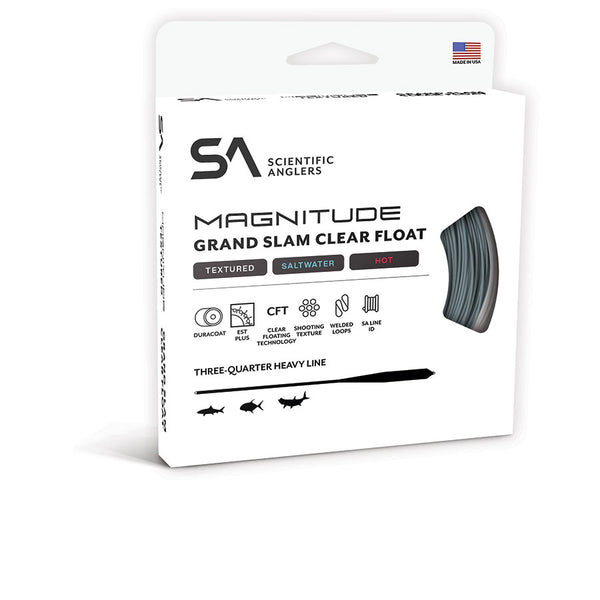




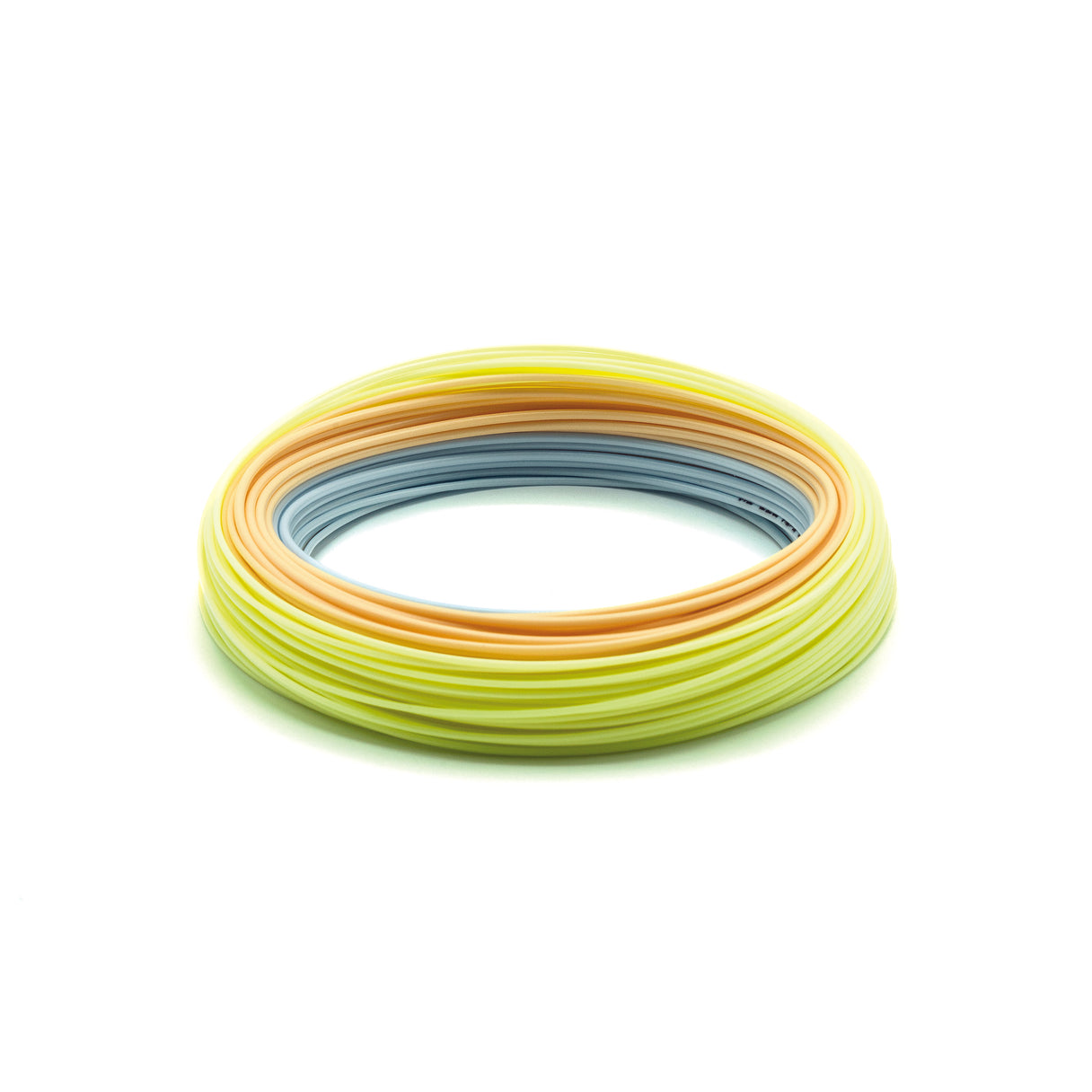
Scientific Anglers Amplitude Smooth Grand Slam
 In Stock • Bozeman, MT

- Features the revolutionary AST Plus slickness additive for superior shooting ability and increased durability
- The perfect line for bonefish, tarpon, and permit on the flats; also great for snook, redfish, and sea trout
- Overweighted by .75 sizes to load rods quickly; use designated line weight for your rod
- Short, powerful head turns over long leaders with heavy flies
- Tropi-Core technology remains stiff and slick in tropical environments


Description
The Amplitude Smooth series of lines are, simply put, the highest-performance smooth fly lines in the world. With up to five times less drag and eight times the durability of traditional lines, this will change the way you look at fly line performance.
Tarpon. Bonefish. Permit. All in one day. All on one fly line. That’s the idea behind the Amplitude Smooth Grand Slam, a line designed specifically to help you achieve one of angling’s most elusive accomplishments. With a short, powerful head the Grand Slam cuts through wind and turns over crabs, shrimp, and tarpon toads with ease. We’ve got the line. You just need the fish.
Features
• Short 40’ Head with ¾ Overweight — Loads fast-action saltwater rods quickly at close range with minimal false casting. Use the line weight designated for your rod; the overweight is already factored in.
• Short Front Taper — Drives energy into large, air-resistant flies and penetrates wind to deliver crab patterns, shrimp flies, and tarpon toads accurately at saltwater distances.
• AST Plus Slickness Additive — Integrated into the coating (not a surface treatment) for sustained shooting performance. Continuously migrates to the outer surface as the line wears.
• Tropi-Core Technology — Core and coating formulated to remain stiff and functional in tropical heat. Designed for use at 80°F and above; not a cold-weather line.
• Smooth Finish — Clean shooting with less surface friction than textured lines. Pairs with AST Plus for a line that continues to perform through a full week of fishing.
• Tri-Color Construction (Horizon/Sand/Yellow) — Visual reference for head position during casting and during a fish’s run. SA-ID coding on the tip section for quick line identification.
• Enhanced Welded Loops — At both ends for fast, secure loop-to-loop connections to leader and backing.
• Available 7–12 wt — Covers the full range of tropical saltwater fly rod weights from light bonefish through heavy tarpon applications.
Rod Pairing
| Rod Action | Pairing | Notes |
|---|---|---|
| Fast Action | Ideal | The Grand Slam’s overweight design and short head are built for fast-action rods. It loads quickly at 30–40 feet with minimal false casts. |
| Medium-Fast Action | Works Well | Works well, though the short, heavy head may feel slightly clunky at close range. |
| Medium Action | Not Recommended | The short, heavy head can overload softer rods and create timing issues. A longer, lighter-headed saltwater line is usually a better fit. |
Size Guide
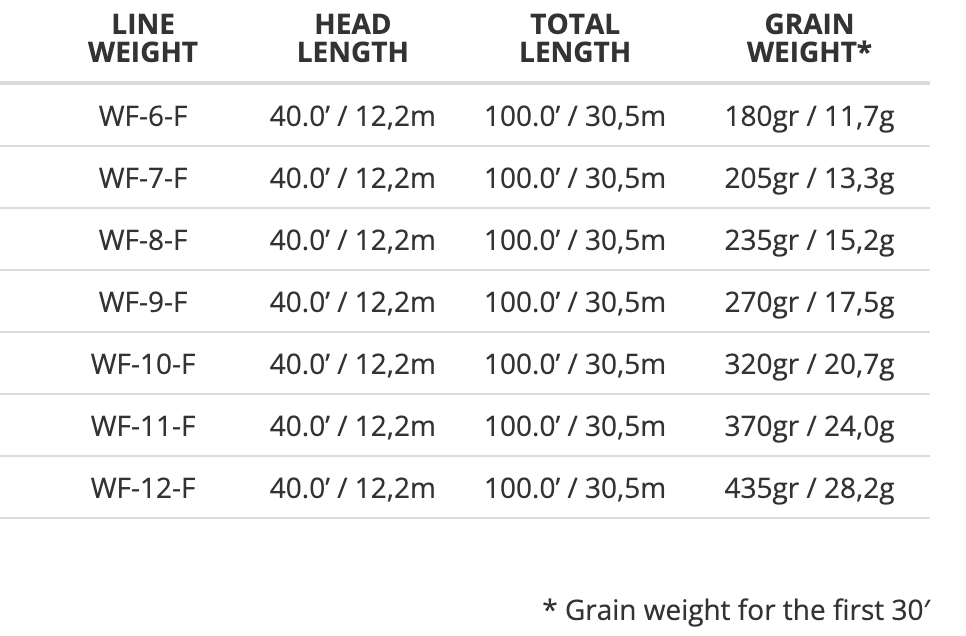
| Line Weight | Head Length | Head Weight | Grain Wt. (30') | Species / Technique |
|---|---|---|---|---|
| WF-6-F | 40' / 12.2M | 230GR / 14.9G | 180GR / 11.7G | Ultra-light bonefish, redfish |
| WF-7-F | 40' / 12.2M | 255GR / 16.5G | 205GR / 13.3G | Light bonefish, redfish, sheepshead, sea trout |
| WF-8-F | 40' / 12.2M | 300GR / 19.4G | 235GR / 15.2G | Bonefish, permit, baby tarpon, triggerfish, redfish, snook, peacock bass, golden dorado |
| WF-9-F | 40' / 12.2M | 335GR / 21.7G | 270GR / 17.5G | Permit, juvenile tarpon, triggerfish, snook, peacock bass, golden dorado |
| WF-10-F | 40' / 12.2M | 405GR / 26.2G | 320GR / 20.7G | Tarpon, permit, bull redfish, trevally, snapper, cuda, bumphead parrotfish |
| WF-11-F | 40' / 12.2M | 450GR / 29.2G | 370GR / 24.0G | Tarpon, GT |
| WF-12-F | 40' / 12.2M | 515GR / 33.4G | 435GR / 28.2G | Tarpon, GT, arapaima, offshore |
FAQ
What are the parts of a fly line and what does each section do?
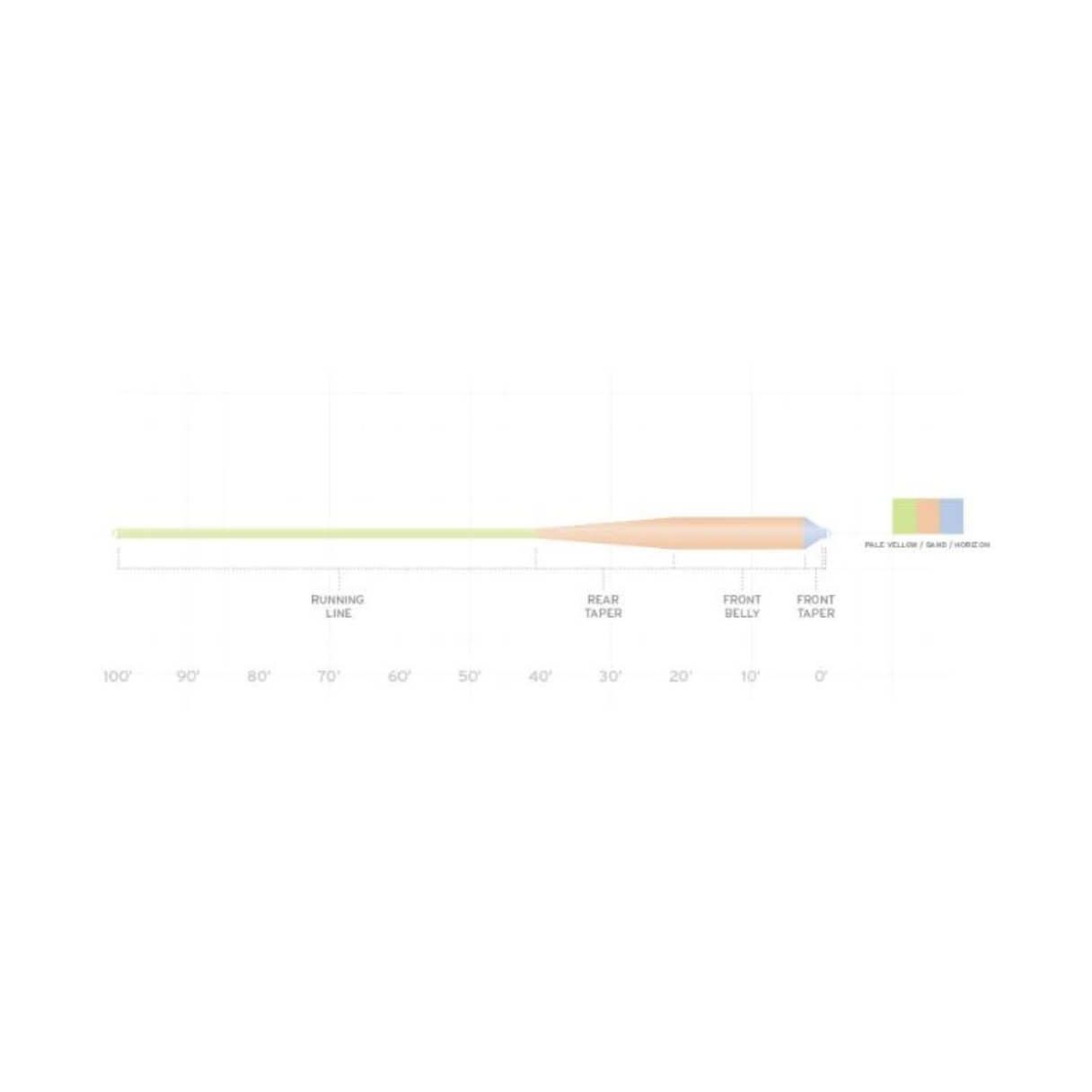
A modern weight-forward fly line has five distinct sections, each with a specific purpose: Running Line: The thin, level line that connects the head to the backing. Its primary job is shooting through the rod guides on the forward cast — thinner diameter means less friction and more distance. The Grand Slam Smooth uses a smooth-finish running line optimized for shooting. Rear Taper: The transition from the thin running line to the thick belly. A longer rear taper allows the line to shoot more smoothly and creates a more gradual energy transfer. A shorter rear taper creates a stiffer, more direct connection to the belly. Belly: The thickest, heaviest section of the line — the main weight carrier. Belly length and weight determine how the rod loads and how much line can be picked up and cast in a single stroke. The Grand Slam has a 40-foot total head (belly + front taper + tip). Front Taper: The transition from the thick belly to the thin tip. This is the most important section for presentation. A short front taper (like the Grand Slam) delivers energy aggressively to the fly — good for heavy flies and wind, but less delicate on calm water. A long front taper dissipates energy gradually for soft, delicate presentations. Tip: The final level section at the end of the line, to which the leader is attached. The Grand Slam’s tri-color construction (Horizon tip / Sand head / Yellow running line) makes the tip immediately identifiable by color.
How does the Grand Slam taper affect casting and presentation?
The Grand Slam’s taper is a short, powerful design optimized for wind penetration, quick loading, and heavy fly turnover — the three demands of tropical saltwater fishing. The 40-foot head is shorter than most general-purpose weight-forward lines (which typically run 50–60 feet), meaning the full weight of the head is outside the rod tip sooner. Combined with the ¾ overweight design, this allows the rod to load and deliver a cast with fewer false casts. The short front taper drives energy into the fly aggressively rather than dissipating it gradually. This is excellent for turning over large, air-resistant patterns like Merkin crabs, tarpon toads, and weighted shrimp — particularly into wind. The trade-off is that the short front taper can create a more abrupt presentation. On calm, clear flats where a delicate entry is critical, this can be a minor disadvantage.
Should I choose the Smooth or Textured Grand Slam?
Both versions use the same Grand Slam taper, Tropi-Core construction, and AST Plus technology, so they cast and fish very similarly. The difference is in the line's surface. The Smooth version glides quietly through the guides and is preferred by anglers who value a refined feel and minimal casting noise. The Textured version features a micro-textured coating that reduces the amount of line contacting the guides, helping it shoot farther and pick up from the water more easily while also reducing friction during repeated long casts. Many experienced saltwater anglers prefer the textured version for demanding conditions where maximum line speed and distance matter, while others simply prefer the quieter feel of a smooth line. Neither is inherently better—the choice comes down to whether you prioritize ultimate shooting performance or a quieter, more traditional casting experience.
What does ¾ line-weight heavy mean, and how do I choose which weight to buy?
The Amplitude Smooth Grand Slam is manufactured to weigh ¾ of a line size heavier than its labeled weight. An 8-weight Grand Slam carries the grain weight of approximately an 8¾-weight, which helps the line load fast-action 8-weight rods at short distances with fewer false casts. This is intentional and SA specifically recommends using the line weight that matches your rod’s marked weight — the overweight is already factored in. In practice: if your rod says 8-weight on the blank, buy the 8-weight Grand Slam.
What is AST Plus and how does it affect the line’s performance?
AST Plus (Advanced Shooting Technology) is SA’s proprietary slickness additive that is integrated into the fly line coating rather than applied as a surface treatment. Because it is part of the coating, it continuously migrates to the outer surface as the outer layer wears — meaning the line maintains its slickness over time rather than losing it after a season of use. SA’s independent testing indicates AST Plus lines shoot up to 70% farther with less friction through the guides and last up to 8 times longer than comparable lines without the additive. The practical result on the water is a line that shoots through guides cleanly and doesn’t require constant treatment to maintain performance.
What is Tropi-Core technology and when does it matter?
Tropi-Core is SA’s tropical formulation for the line’s core and coating. Standard fly lines can become limp and coil-prone in high heat, which causes them to drop through the rod guides and reduces casting performance significantly in tropical conditions. Tropi-Core maintains the line’s stiffness and memory in hot environments — SA specs it for air and water temperatures of 80°F and above. This matters on a flats skiff at 10 AM in Belize or the Yucatan where the deck can be 100°F. The important flip side: because Tropi-Core is formulated for tropical use, the line becomes stiff and loses performance in cold conditions. Do not use the Grand Slam for early-season saltwater fishing in cold climates or any freshwater application — it is specifically a warm-weather tropical line.
What does the tri-color system (Horizon/Sand/Yellow) do?
The three-color construction serves a practical visual purpose. The Horizon (blue-gray) tip is at the leader connection end. The Sand-colored section is the head. The Yellow running line begins at the rear of the head and continues to the backing. For fishing, the color transition from Sand to Yellow tells you exactly when the head has entered the rod guides. On a fish that makes a long run, the Yellow running line also provides a visual reference for how much line is out and how much backing is approaching. The SA-ID system (the line’s model code embossed into the first foot of the tip) allows you to identify the line.
How should I clean the fly line?
Regular cleaning keeps your fly line casting, floating, and shooting at its best. Dirt, salt, algae, and other debris create friction that reduces performance over time.
The Amplitude Grand Slam Smooth features Scientific Anglers' AST Plus technology, which is integrated throughout the line—not just applied to the surface. Cleaning helps keep the line's microscopic pores open, allowing AST Plus to maintain its slickness and performance.
For routine maintenance, wipe the line with a wet Scientific Anglers Fly Line Cleaning Pad. If the line has heavy salt or grime buildup, soak it briefly in lukewarm water mixed with Scientific Anglers Fly Line Cleaner before wiping it clean. Rinse with fresh water and let it dry before storing.
Cleaning your line every few outings—or after every saltwater trip—is one of the easiest ways to maximize its performance and lifespan.
What are the downsides of the SA Amplitude Smooth Grand Slam?
The Grand Slam is a versatile line, and versatility always involves compromise. On very calm, clear flats where a delicate presentation is critical, the short front taper can create a more aggressive presentation than a species-specific bonefish or permit line. This aggressive taper and 3/4 heavy line size also means having the right rod is crucial. A fast action rod is going to get the most of out this line, and anglers should understand the line is significantly overweighted. This can lead to a clunky feeling when false casting or carrying a lot of line, though the tradeoff is an exceptional ability to quickly shoot line.

Product Video