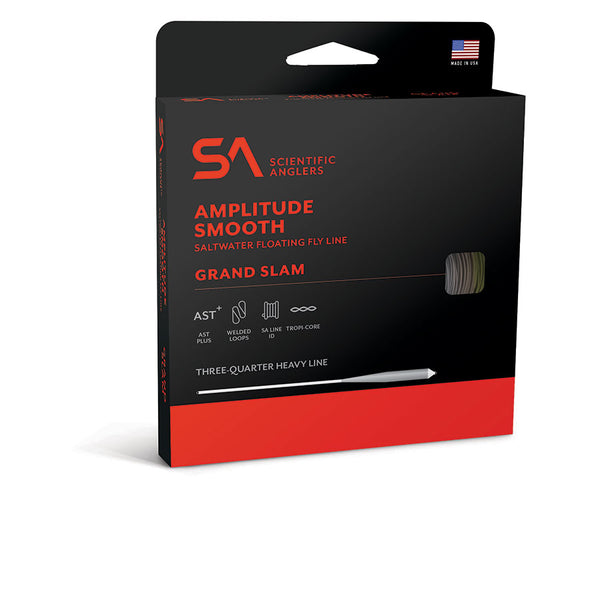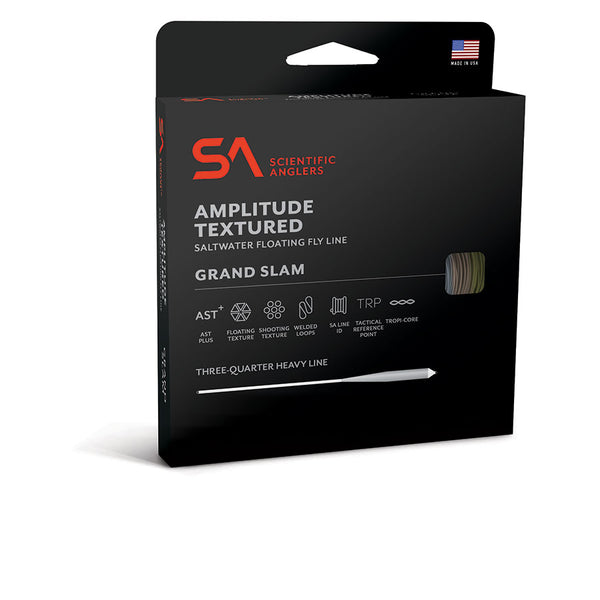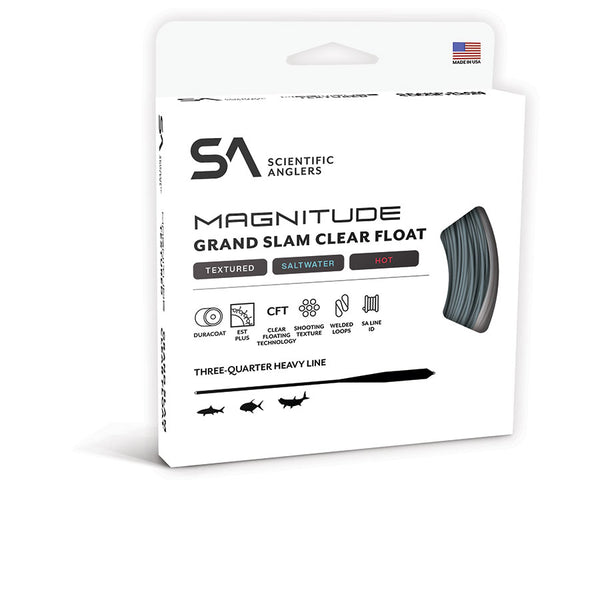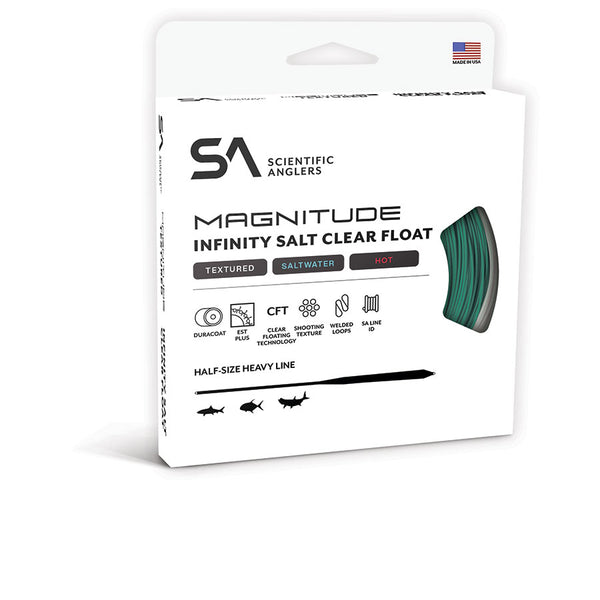




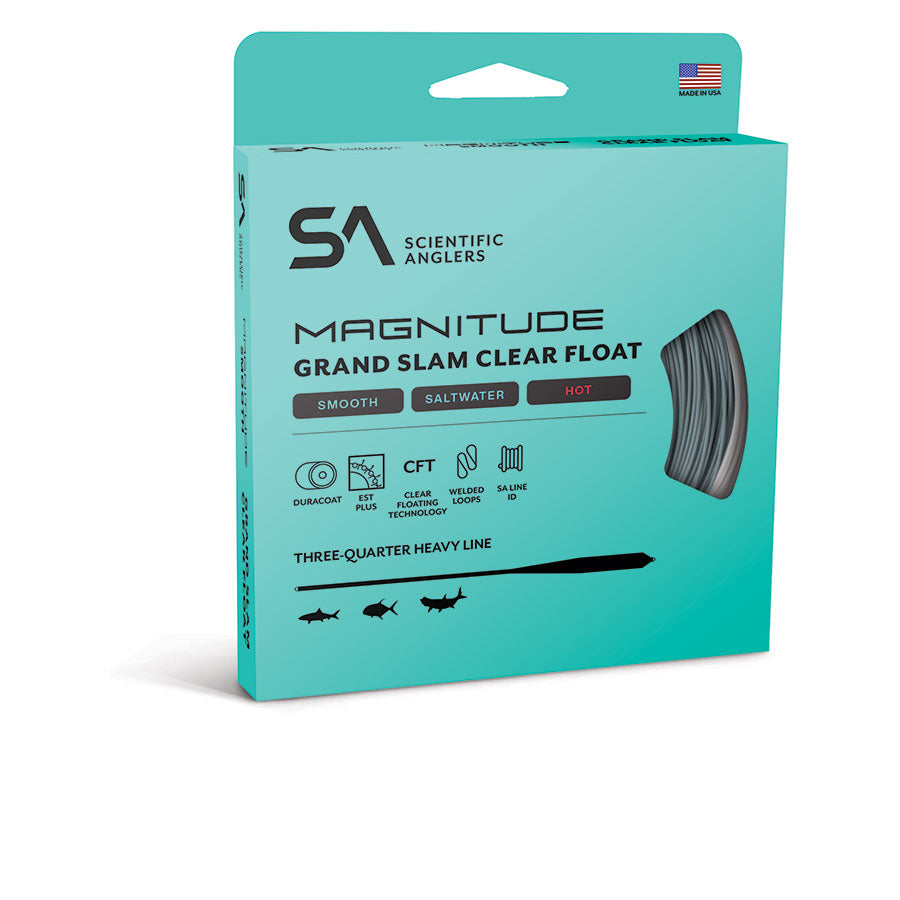

Scientific Anglers Magnitude Smooth Grand Slam Full Clear Float
 In Stock • Bozeman, MT

- DURACOAT – Specialized dual-polymer design optimizes line stiffness, slickness, and abrasion resistance while significantly reducing line memory and tangles.
- EST PLUS – EST+ - proprietary slickness additive that provides unmatched durability, smoother shooting, and eco friendly performance.
- CFT – Clear Floating Technology uses naturally buoyant polymers for the ultimate in stealthy presentation and best-in-class durability.


Description
The SA Amplitude Grand Slam Full Clear Float is the same line as the standard Grand Slam — same 40-foot head, same ¾ overweight, same short front taper, same grain weights from 6 through 12 weight — built entirely from clear material. Every foot of it. Head, running line, tip. No colored sections, no tri-color system, no visual reference for head position. Just the most stealthy presentation a floating fly line can offer.
For the most demanding flats situations — permit on the flats of Southern Belize, Keys tarpon, triggerfish in the Seychelles — the colored tip section of any partially-clear or standard-colored line is visible to the fish at some point during the presentation. The full clear construction removes that variable entirely. AST Plus integrated into the clear coating maintains the slickness and durability the Amplitude series is built on, and Tropi-Core keeps the coating firm in tropical heat.
Features
• Fully Clear Throughout — Entire 100-foot line is clear — head, running line, and tip. No colored sections at any point in the line. Maximum stealth for the most demanding clear-water flats presentations.
• Same Grand Slam Taper — 40’ head, ¾ overweight, short front taper. Identical casting behavior to the standard Grand Slam. Use the line weight matching your rod’s marked weight.
• AST Plus Slickness Additive — Integrated into the clear coating for sustained shooting performance. Helps the clear coating resist cracking and surface degradation over time.
• Tropi-Core Technology — Core and coating formulated for tropical heat. Not suitable for cold water use.
• Available in Smooth & Textured Running Line — Smooth: standard clear coating throughout. Textured: Amplitude Texture micro-pattern on the running line for reduced guide friction and tactile boundary detection — particularly useful on a fully clear line where visual head tracking is not possible.
• Welded Loops — Front and rear welded loops for fast, secure connections.
• SA-ID — Line identification code on the first foot of the tip section for identifying the line on a reel with multiple spools.
• Available 6–12 wt — Full tropical saltwater range.
• 100% Made in USA.
Rod Pairing
| Rod Action | Pairing | Notes |
|---|---|---|
| Fast Action | Ideal | The ¾ overweight and short 40' head load fast-action rods quickly at close range. |
| Medium-Fast Action | Works Well | Performs well on medium-fast rods, where the overweight design aids close-range loading. |
| Medium Action | Not Recommended | The short, heavy head can overload softer rods. A longer, lighter-headed line is generally a better fit. |
Size Guide
Size Guide
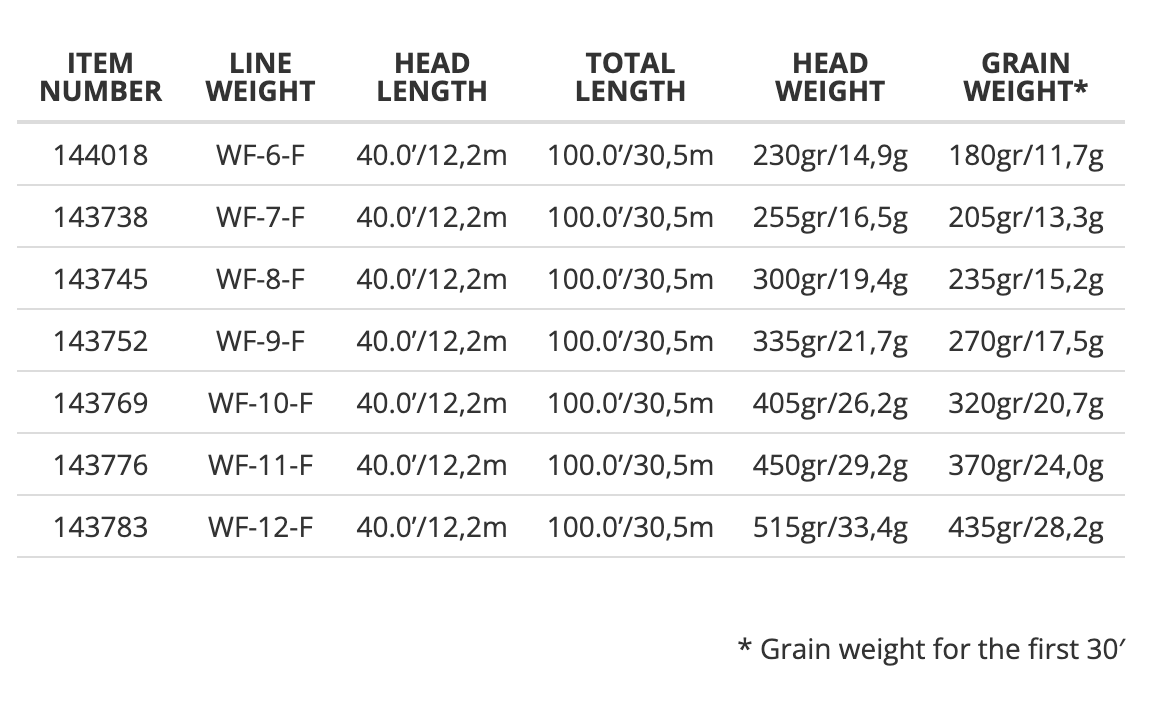
| Line Weight | Head Length | Head Weight | Grain Wt. (30') | Species / Technique |
|---|---|---|---|---|
| WF-6-F | 40' / 12.2M | 230GR / 14.9G | 180GR / 11.7G | Ultra-light bonefish, redfish |
| WF-7-F | 40' / 12.2M | 255GR / 16.5G | 205GR / 13.3G | Light bonefish, redfish, sheepshead, sea trout |
| WF-8-F | 40' / 12.2M | 300GR / 19.4G | 235GR / 15.2G | Bonefish, permit, baby tarpon, triggerfish, redfish, snook, peacock bass, golden dorado |
| WF-9-F | 40' / 12.2M | 335GR / 21.7G | 270GR / 17.5G | Permit, juvenile tarpon, triggerfish, snook, peacock bass, golden dorado |
| WF-10-F | 40' / 12.2M | 405GR / 26.2G | 320GR / 20.7G | Tarpon, permit, bull redfish, trevally, snapper, cuda, bumphead parrotfish |
| WF-11-F | 40' / 12.2M | 450GR / 29.2G | 370GR / 24.0G | Tarpon, GT |
| WF-12-F | 40' / 12.2M | 515GR / 33.4G | 435GR / 28.2G | Tarpon, GT, arapaima, offshore |
FAQ
What are the parts of a fly line and what does each section do?
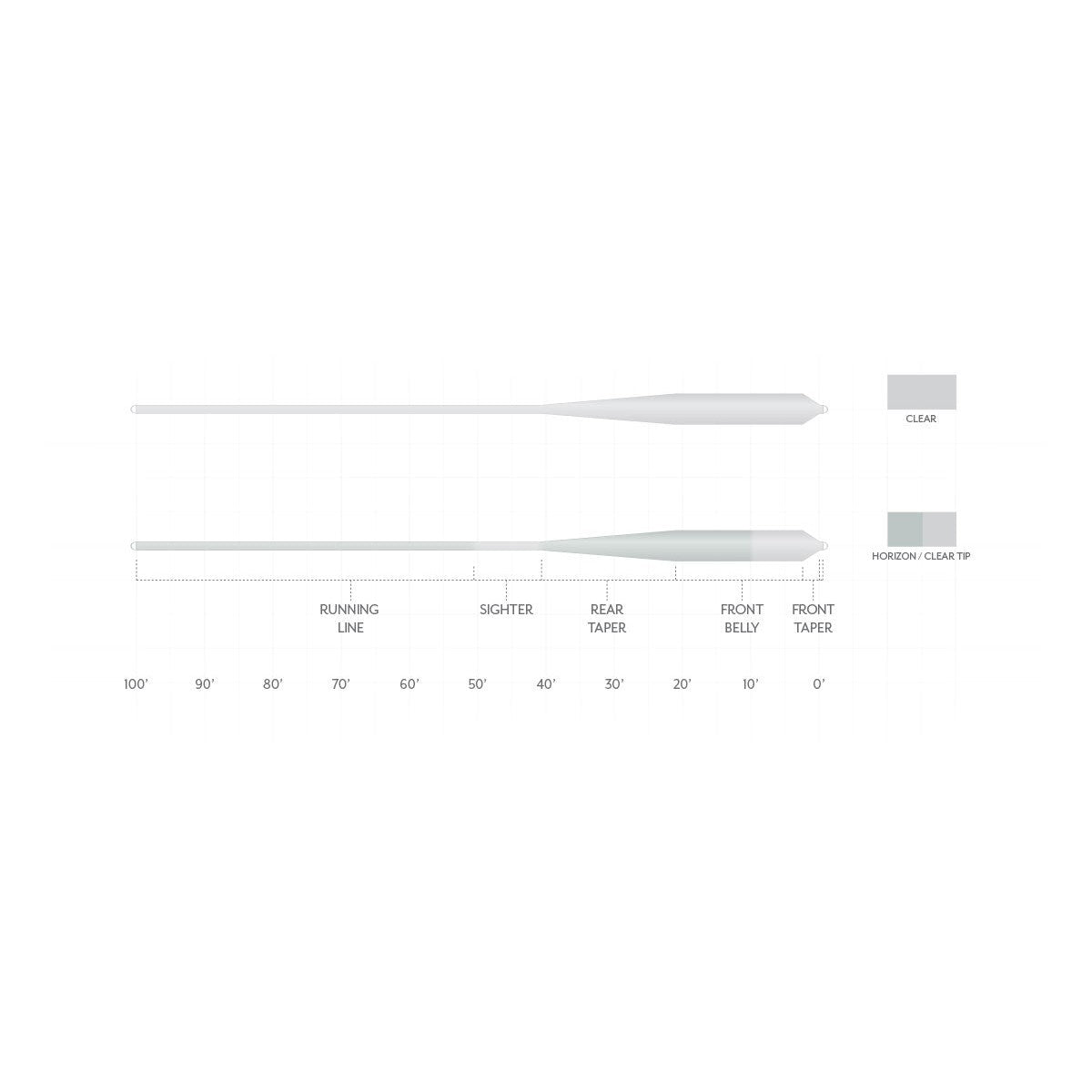
A weight-forward fly line has five sections: Running Line: The thin, level back section that shoots through guides on the forward cast. On the full clear version, the entire running line is clear — unlike the 10’ clear tip version, there is no colored transition to the running line. Rear Taper: The transition from running line to belly. On the full clear line, there are no color changes to signal this transition — the boundary must be detected by feel or by the SA-ID coding on the first foot of the tip. Belly: The thickest, heaviest section — the primary weight carrier. The Grand Slam’s 40-foot head (belly + front taper + tip) is shorter than most general-purpose lines for quicker loading. Front Taper: The transition from belly to tip. The Grand Slam’s short front taper drives energy aggressively into the fly for turnover of heavy patterns in wind. Tip: The final clear section where the leader connects. On the full clear version, the tip is visually identical to the rest of the line, maximizing stealth at the fly connection.
How does the full clear version differ from the 10’ clear float tip version?
The 10’ clear float tip version (Magnitude Grand Slam Clear Tip) has a colored head and running line with only the final 10 feet clear. The full clear version (this line) is clear throughout the entire 100-foot length — head, running line, and tip. The primary advantage of the full clear version is maximum stealth: there is no colored section anywhere near the fish at any point in the presentation. The trade-off is that a fully clear line is significantly harder for the angler to see and track during casting and during a fish’s run. The 10’ tip version provides a visible head for casting reference and distance measurement while still clearing the immediate fly zone. The full clear is the choice for maximum stealth in the most demanding conditions; the tipped version is a more practical everyday compromise. We recommend if you are an angler with limited or no experience with clear lines, opt for the 10' at first.
When does a fully clear fly line provide the most benefit?
The full clear line provides its most meaningful advantage when fishing ultra-clear, shallow water with wary, pressured fish or during calm, low-wind conditions. The full clear is less suited to choppy or off-color water (where fish visibility is reduced and the angler’s visibility disadvantage isn’t offset by stealth gains), fast-moving fish situations (where fast reaction time matters more than maximum stealth), or conditions where detecting subtle takes on the surface is critical.
What is the difference between the Smooth and Textured versions?
Both versions are fully clear throughout and share the same taper, grain weights, head length, core technology, and AST Plus formulation. The difference is the running line finish: Smooth (Amplitude Smooth Grand Slam Full Clear): Standard smooth coating on the running line. Clean, quiet through the guides; traditional smooth feel during retrieves. Textured (Amplitude Textured Grand Slam Full Clear): SA’s Amplitude Texture micro-pattern on the running line, which reduces the contact area between the line and guide surface to improve shooting distance. The texture provides a tactile reference for detecting the head-to-running-line boundary by feel rather than sight — particularly useful on a fully clear line where visual detection of that boundary is not possible. Many anglers fishing fully clear lines specifically prefer the textured version for this reason. The Amplitude Texture is different from the Shooting Texture used on the Magnitude Textured series — both reduce friction through guides but use different micro-pattern geometries.
How do I track casting distance and head position without a colored line?
This is the central practical challenge of a fully clear line, and it has a few solutions. The SA-ID code is printed on the first foot of the tip section and can be used to identify the line on the reel, but doesn’t help during casting. The Textured version’s running line texture provides a tactile reference — when the texture starts feeding through your stripping hand, the head is entering the guides and it’s time to shoot. Some anglers use a permanent marker to make a small mark at the head-to-running-line boundary on a clear line. Others track the fly or leader connection visually. After at least a full day of fishing a clear line, most experienced anglers develop a reliable feel for timing without a visual cue, though it can be challenging for some anglers to adjust.
How do I care for this line?
Rinse the entire line with fresh water after every saltwater session. For the clear coating specifically: do not apply line dressing to any section of the line, as most dressings will cloud or damage clear coatings. Do not leave the line on a hot surface in direct sunlight for extended periods. If memory or coiling develops (most likely in the running line after extended storage), stretch the line gently by hand. Inspect the coating regularly for cracks, which will appear as white lines or surface clouding on the clear material. A cracked or significantly clouded section should be replaced — cracking compromises both durability and the line’s optical clarity.
Product Video