




Lake Nyerere Tigerfishing


Africa's Newest Tigerfish Frontier


Who is this trip for?
- Anglers looking to explore a new tigerfish fishery
- Anglers who enjoy aggressive, highly visual fishing
- Adventure-minded travelers drawn to remote wilderness
Toggle Between Categories:

Trip Overview
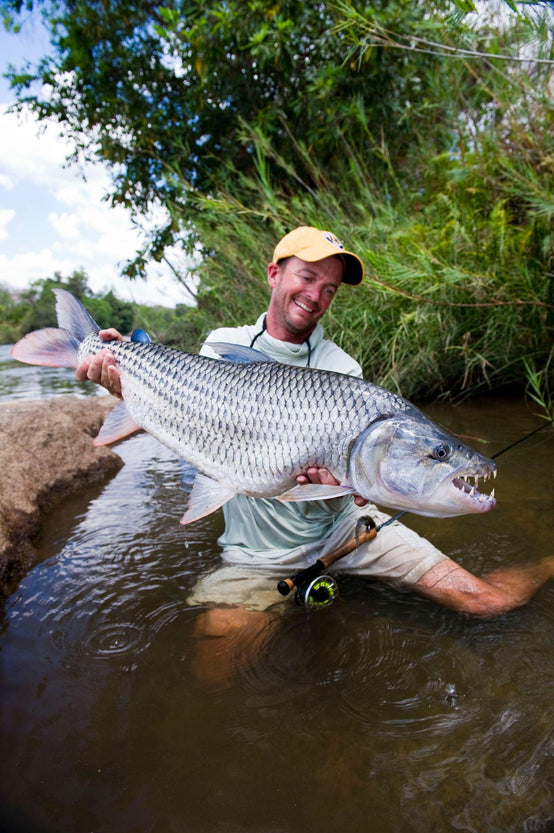
Hidden deep within southern Tanzania's Julius Nyerere National Park, Lake Nyerere is one of the most intriguing new freshwater fisheries to emerge in Africa in decades. The reservoir only finished filling in 2024, flooding an immense landscape of old river channels, forest, rocky shorelines, bays, points, and submerged timber. FlyCastaway's first exploratory trip revealed extraordinary numbers of Tanzanian tigerfish, including fish to 16.5 pounds and sightings of substantially larger fish. Beginning in July 2027, anglers will be able to experience the fishery from a purpose-built East African-style safari camp on the Great Ruaha arm of the lake. It is a rare chance to fish a young, minimally pressured system while it is still being explored and understood.
Lodging Details
The camp is being built on a wooded peninsula along the western shore of the Great Ruaha arm of the lake. Ancient miombo woodland surrounds the property, while the peninsula's position gives each guest tent its own outlook over the water.
The camp will feature ten contemporary safari-style guest tents raised on wooden decks. Each standard tent measures approximately 8 x 4.5 meters and includes an ensuite bathroom with shower, toilet, and basin. King-size beds can be converted into two singles, and rooms include a side table and chair, dressing table, and storage for clothing and luggage.
A single Presidential Unit provides an upgraded option. Unlike the canvas guest tents, it is a permanent structure with insulated walls, double-glazed windows, air conditioning, a large private deck, and an ensuite bathroom with a bath, indoor shower, toilet, basin, and private outdoor shower.
At the center of camp is a large main lodge with dining, lounge, and bar areas overlooking Lake Nyerere. A dedicated mudroom beside the jetty provides individual tackle cubicles, rigging stations, fishing-supply storage, and a place to safely store rods between sessions. The camp is designed to operate largely on solar power and will have its own water-filtration and storage systems.
Food and Beverages
All meals, soft drinks, and local beers are included. Fishing days generally begin early with coffee and a light snack before the morning session. Depending on the day's fishing plan, lunch may be served back at camp or taken on the water. Evenings center around the main lodge, where guests can have a drink, eat dinner, and unwind after the day's fishing. Spirits and wine are not included in the package.
Typical Length of Stay
The standard program is seven nights at camp with six full fishing days. Guests arrive in Dar es Salaam one day before the scheduled start date and overnight independently. The following morning, the group flies by private charter to Lake Nyerere and transfers by road to camp. The arrival day is used for settling in, lunch, a fishing briefing, and tackle setup before six consecutive fishing days.
Non-Angling Activities and Options
Lake Nyerere sits inside Julius Nyerere National Park, placing guests in the middle of a remarkable East African wilderness. Hippos and Nile crocodiles inhabit the lake, Fish Eagles are common, and the surrounding bush supports lion, leopard, elephant, buffalo, zebra, sable, African wild dog, and numerous other species. Four of Africa's Big Five occur in the area, and the camp itself is unfenced.
This remains a fishing-first program rather than a traditional safari itinerary, but game drives can be arranged for guests willing to give up a fishing session. The road transfer between the airstrip and camp also doubles as an informal game drive through the park.
Internet / Communications
Wi-Fi will be available at camp for the inaugural 2027 season. Connectivity will initially be centered around the main lodge, including the lounge, dining, and bar areas. Wi-Fi is not currently expected to be available in individual guest tents during the first season.


Gallery


Similar Trips
Quick Reference Legend