



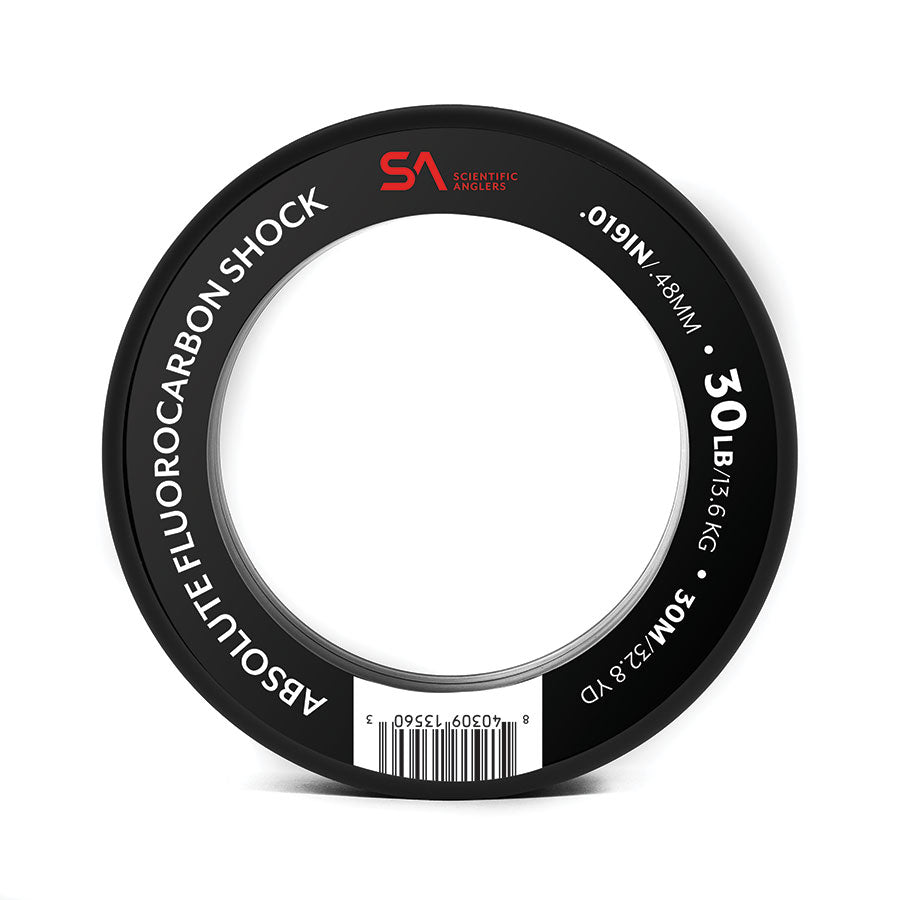
Scientific Anglers Absolute Fluorocarbon Shock Tippet
 In Stock • Bozeman, MT
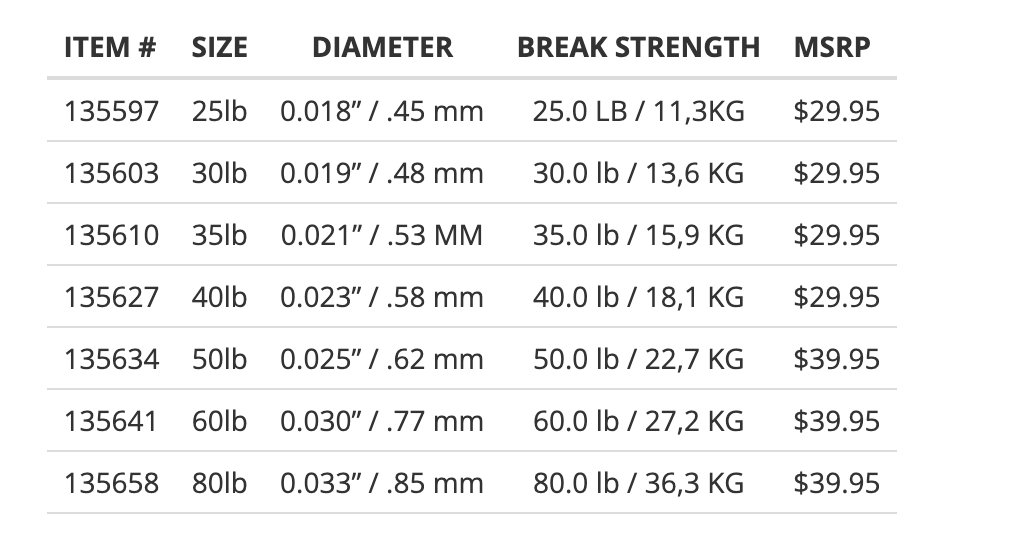

- Extreme abrasion resistance for Saltwater and Predatory fish
- 100% Fluorocarbon
- Sizes: 25lb – 80lb
- Length: 30m spools in all sizes
- Unique open-hub spool for easy dispensing


Description
When a 120 lb tarpon turns on the fly and the fight moves into its second half, the only thing standing between you and a broken connection is your shock tippet. When a giant trevally wraps the leader around a coral head at full speed, the shock is what either holds or doesn’t. This is the component that most anglers spend the least time thinking about — until it fails.
The Scientific Anglers Absolute Fluorocarbon Shock Tippet is built for exactly these moments. Available in strengths from 25 to 100 lb, all in 30m spools, the Absolute Shock uses 100% fluorocarbon with SA’s Absolute copolymer formulation delivering 15% higher wet knot strength than their previous material and extreme abrasion resistance for the species and conditions where shock tippet matters most: tarpon, giant trevally, sailfish, cobia, wahoo, marlin, and any saltwater or predatory fish with an abrasive mouth, sharp teeth, or a tendency to bury itself in structure.
The unique open-hub spool design keeps the material from tangling and reduces the coil memory inherent in stiffer, heavy fluorocarbon — a practical detail that matters at 5 AM on a skiff when you’re rigging by headlamp before the tide changes. In 25–40 lb for standard flats and tarpon applications, or 50–100 lb for trevally and pelagics, the Absolute Shock is the fluorocarbon tippet that performs when it has to.
Features
• 100% Fluorocarbon — Superior abrasion resistance vs. nylon mono at equivalent diameters. Less visible in clear water than hard mono. Preferred for flats species and offshore applications where clarity matters.
• 15% Higher Wet Knot Strength — SA’s Absolute fluorocarbon formulation produces stronger, more reliable knot performance than their previous material — critical when shock tippet knots are under sudden, maximum load.
• Extreme Abrasion Resistance — Engineered for the rough mouths of tarpon and GT, the hard jaws and teeth of billfish, and contact with coral, rock, and structure during a fight.
• 25–100 lb — Covers every saltwater shock tippet application from baby tarpon and snook to blue marlin and trophy GT.
• 30m Spools in All Sizes — Generous spool length for a full season of fishing. Each spool provides dozens of shock sections.
• Open-Hub Spool Design — SA’s unique open-center spool reduces tangling and coil memory for smooth, kink-free dispensing in the field.
Size Guide
| Strength | Diameter | Typical Shock Length | Technique / Application | Destinations |
|---|---|---|---|---|
| 25 lb | 0.018" | 6–10" | Juvenile tarpon (20–40 lbs), large snook, cobia, striped bass | Belize, Honduras, Mexico |
| 30 lb | 0.019" | 6–10" | Mid-size tarpon (50–80 lbs), roosterfish, striped bass, large snook | Florida Keys, Mexico, Cuba, Costa Rica |
| 40 lb | 0.023" | 8–12" | Large tarpon (100–150 lbs), trevally, roosterfish, cobia — the most commonly used shock weight for serious tarpon | Florida Keys, Guatemala, Costa Rica, Seychelles, St. Brandon’s |
| 50 lb | 0.025" | 10–18" | Offshore, reef species | Seychelles, St. Brandon’s, Christmas Island, Guatemala, Panama |
| 60 lb | 0.030" | 12–18" | Offshore, reef species | Seychelles, St. Brandon’s, Christmas Island, Guatemala, Costa Rica |
| 80 lb | 0.033" | 12–24" | Giant trevally, arapaima, offshore | Guatemala, Costa Rica, Panama, Seychelles |
| 100 lb | — | 18–24" | Giant trevally, arapaima, offshore | Guatemala, Panama, Costa Rica, Seychelles |
FAQ
What is shock tippet and why do I need it?
Shock tippet is a short section of heavy fluorocarbon added between the class tippet and the fly. It serves two purposes: abrasion protection and shock absorption. Species like tarpon, GT, and sailfish have extremely rough or bony mouths that will cut through standard class tippet during a fight. The short, heavy shock section handles this contact point while the lighter class tippet determines the leader’s strength rating. Shock tippet is also useful for species that make violent head-shakes or sudden surges at boatside where the mechanical shock to the knot would break a lighter section.
How long should my shock tippet be?
For IGFA world record consideration, the shock tippet must be 12 inches or less, measured from the eye of the hook to the junction with the class tippet (including any knot). For non-record fishing, most anglers fish 12–18 inches for tarpon, which provides more protection during the fight without significantly affecting presentation. For GT and billfish where presentation stealth is less critical, 18–24 inches is common. See the selection guide above for typical lengths by species.
Why use fluorocarbon for shock tippet instead of hard mono?
Fluorocarbon’s superior abrasion resistance compared to nylon mono at equivalent diameters is the primary reason it’s preferred for shock tippet in most flats and light offshore applications. It is also less visible than nylon, which matters in clear water. However, some anglers and guides — particularly for tarpon — prefer hard nylon mono for shock tippet because it is more supple at heavier strengths, knots more easily, and provides good abrasion resistance. For GT, wahoo, and billfish where maximum abrasion resistance is the priority, fluorocarbon is generally preferred.
What is the open-hub spool design?
SA’s Absolute Fluorocarbon Shock comes on a unique open-hub spool that allows the material to be dispensed easily without tangling or kinking. The open center hub keeps the coils from stacking tightly, reducing the line memory that is common in stiffer, heavier fluorocarbon. In practical terms, your shock tippet comes off the spool more smoothly and requires less straightening before use — a genuine practical advantage at 5 AM on a skiff.
Product Video